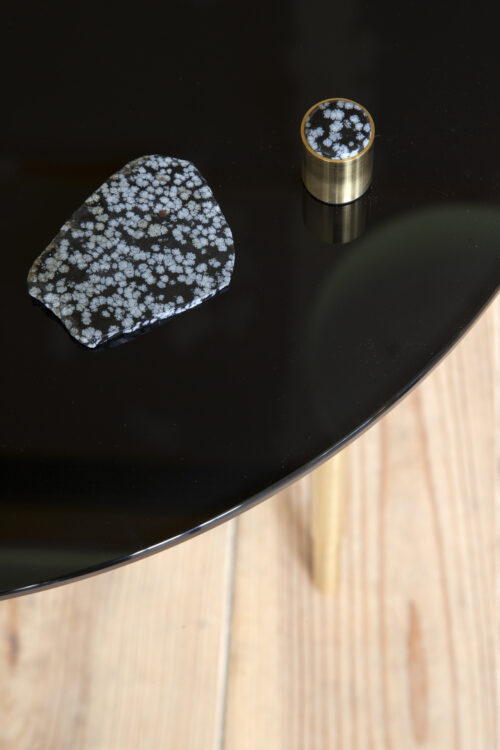
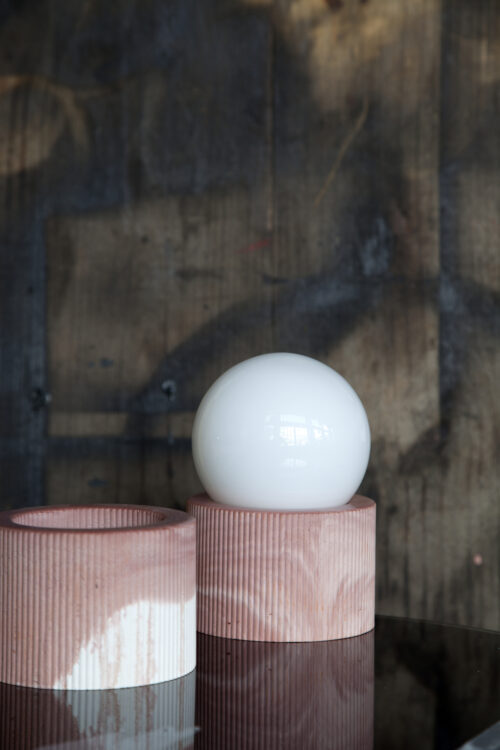
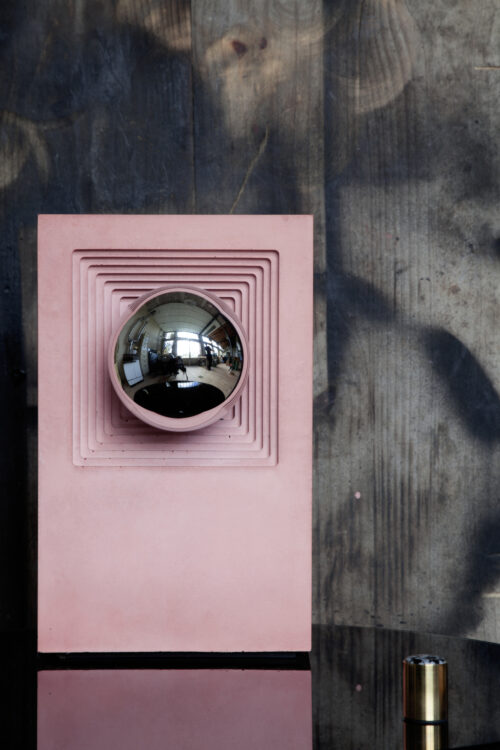
From brutalist table lamps to turned brass door knobs adorned with tokens of semi-precious stones, from molded concrete to jewelry-like accessories, Herah is a universe turned towards the interior, the fruit of the meeting of two design and manufacturing enthusiasts.
"In July 2018, he told me, "As soon as you're ready, we'll put something together." I was ready right away."
It's a story of friendship. And of entrepreneurship too. In other words, tenacity. Particularly when, after buying the machines, building the workshop and launching the store, two weeks after opening, the second lockdown occurred. And closure. No need to discourage these enthusiasts who are convinced that quality always pays off. Because it's noticeable.
"Our interest lies more in making the object than in the fact that people know we know how to make objects."
Even away from social networks. They speak to us of a generation that plugs into its desires first and foremost, and which, far from the patterns or trends in which we would like to confine it, frees itself from the dictates of time. To take its time. Time for the interiority needed to mature a beautiful idea, through reflection and gesture. Because they know that it's pointless to separate intelligence and the hand. And that from any material, even the rawest, a jewel can be created with skill, heart and care. Welcome to Picardy, to Louis and Quentin's hidden workshop.
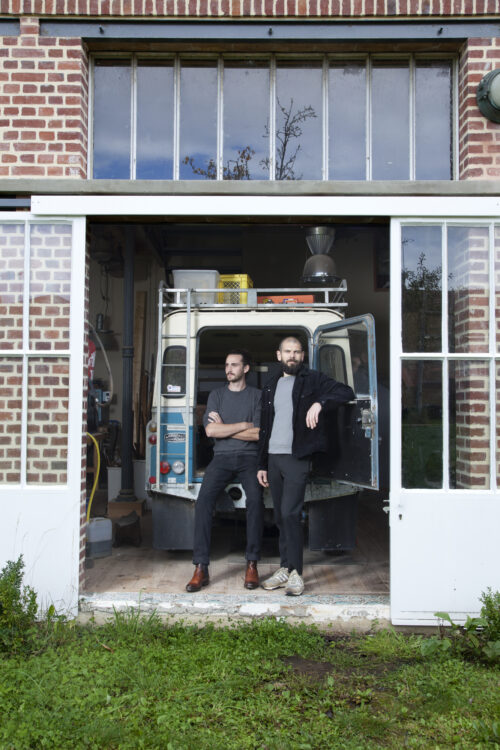
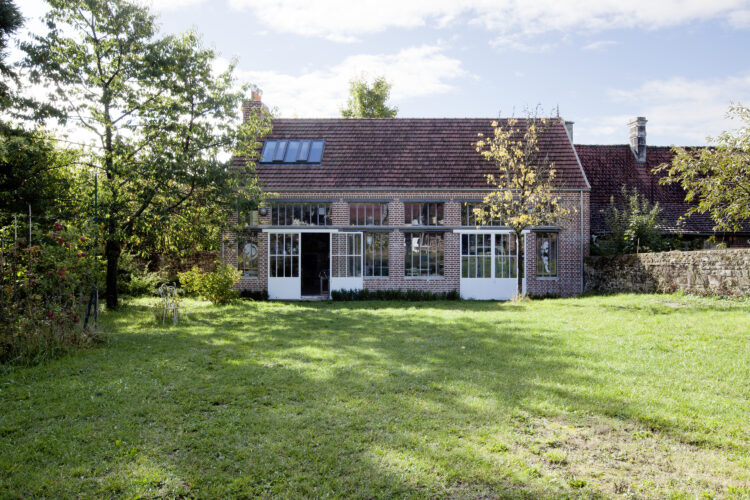
Louis and Quentin, outside their workshop.
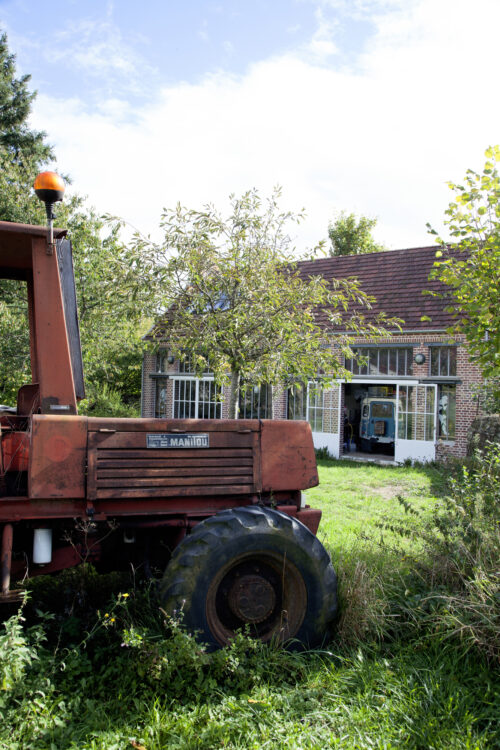
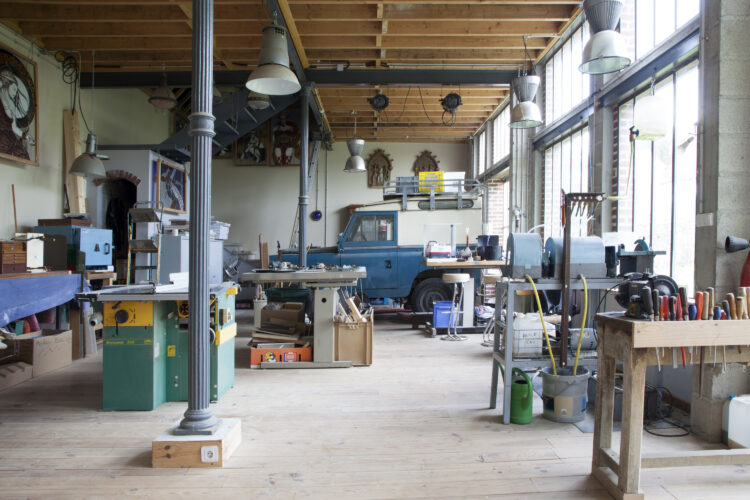
“We’re at my parents’ house. My father is clearly a builder.”
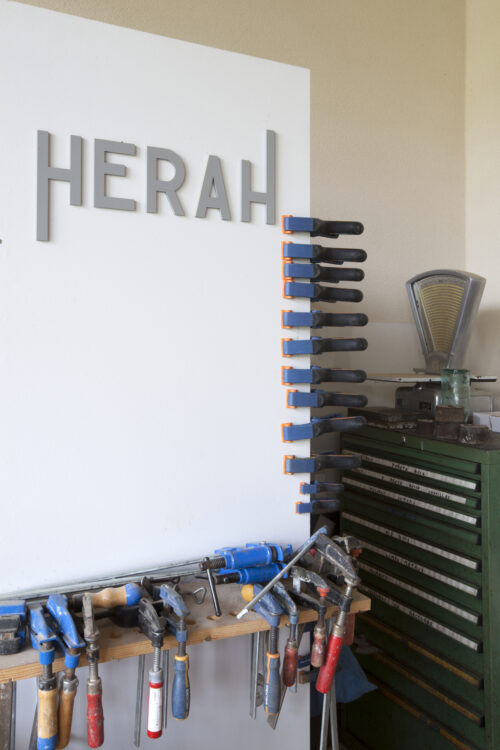
“Herah is like Hergé the cartoonist, Georges Remi. Herah is the same. R for Ravasse, which we wrote “Her”, and A for Ainesi, which we wrote “ah”. We worked a lot on the logo and really liked the symmetry of the H’s.”
“We do two to three day sessions at the workshop. To knock out a production cycle. And every day, we have the same routine.”
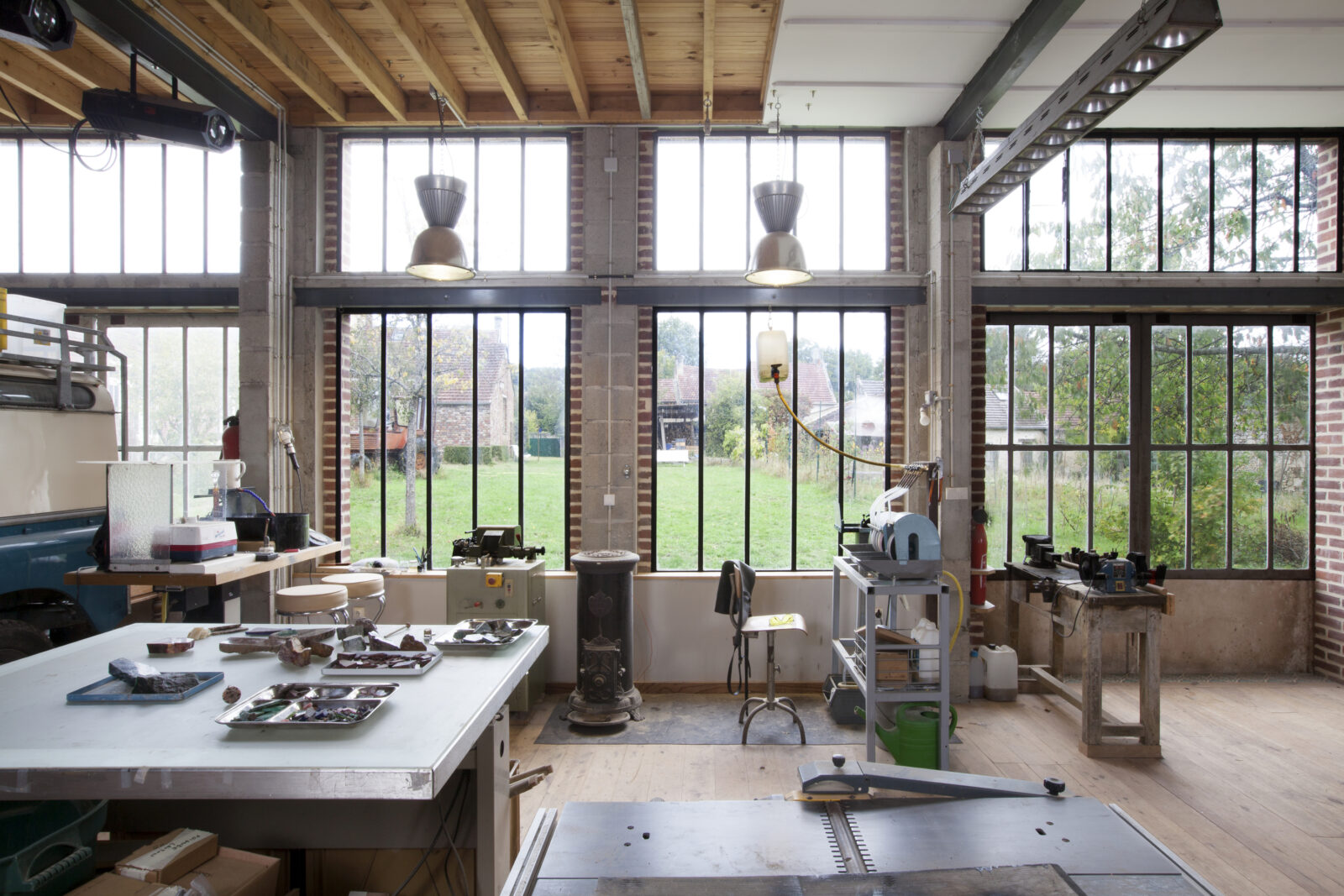
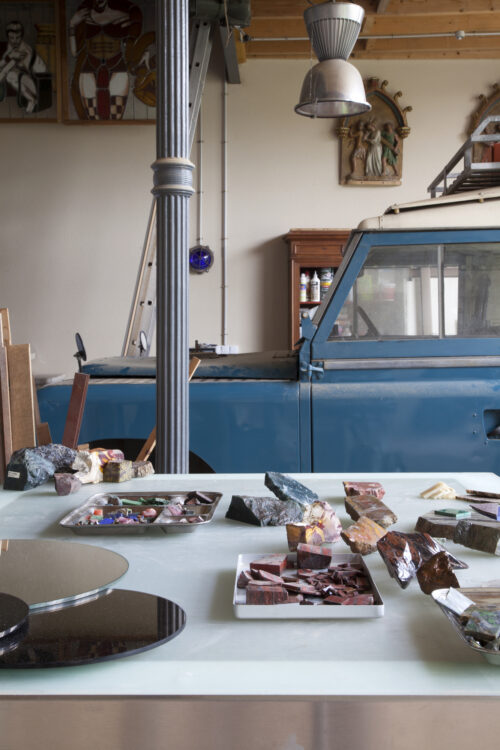
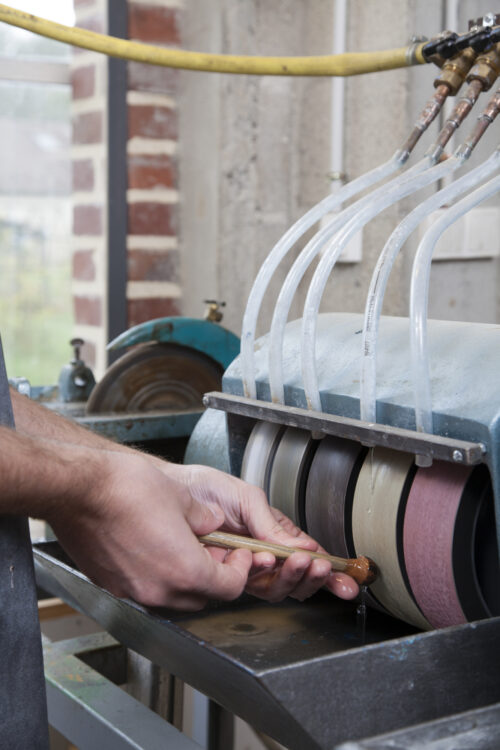
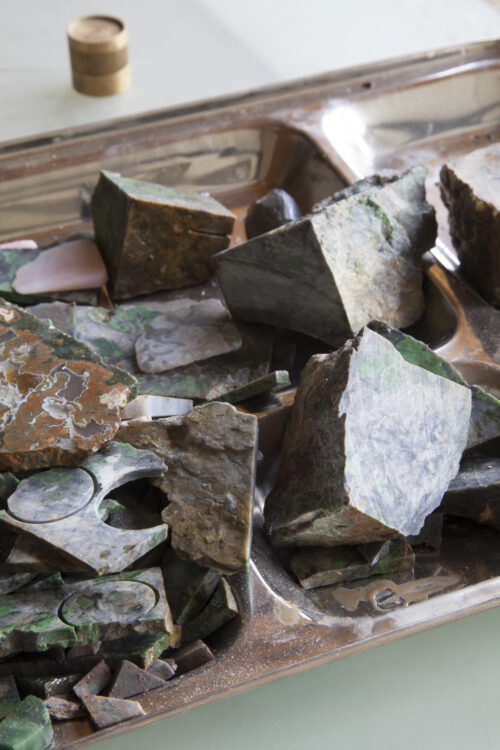
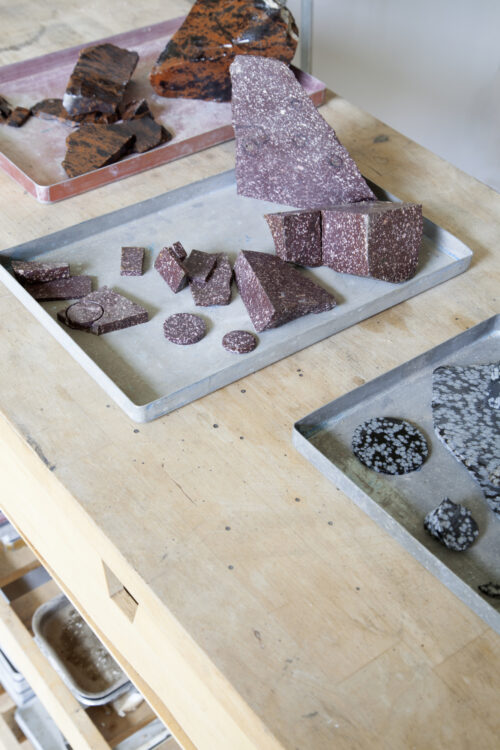
“Stone cutting, from block to token, from block to cabochon. We pour the concrete there, we make all the dies, so we do all the lamp work. And we subcontract the glassmaking part and the metal-turning part.”
“I grew up in auctions. You buy stuff and everything finds its place sooner or later.”
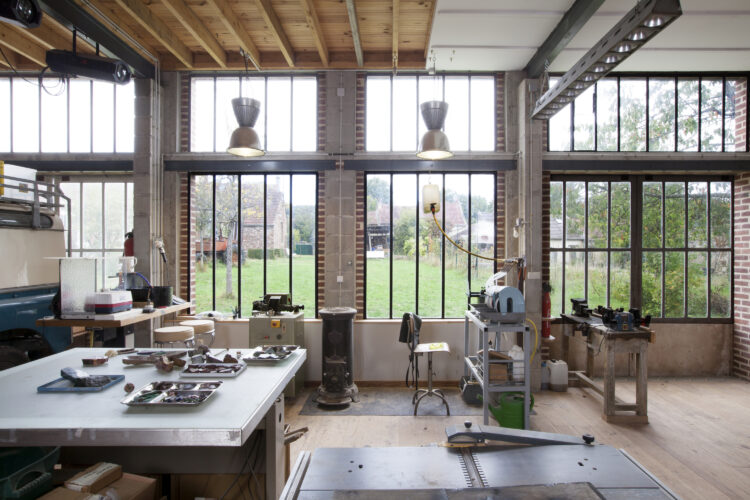
“We make a fire, but in this case, there are four meters under the ceiling, so in winter, the stove, it’s there to warm your fingers.”
“In this workshop, we can do anything. We have machines for carving wood, cutting metal, welding, there’s a glass furnace.”
Louis at the cabochonneuse refines the surface of a stone he is cutting on an 800-grain strip.
Louis with a flame. An alcohol lamp is used to melt the “cement”, a kind of wax that fixes a rough stone to a handle, a dop, so that it can be cut. The stone is thus fixed before cutting and removed afterwards.
” Quentin and I don’t talk at the workshop. But if one of us needs a hand, the other comes to see him. There’s a real synergy.”
“Our way of working with stone is relevant because the little lambda thing becomes the precious object of an apartment.”
“Tomorrow, if someone asks us for a special patina, we’ll do it. A door knob set with sapphire, we’ll do it. Brass? Aluminum? No problem. Forty five door knobs for a New York dressing room? We’ve done it before.”
“The stones are bought at the mineral fair in Sainte-Marie-aux-Mines, in the Vosges. It’s the world’s third-largest gem show.”
“What we’re looking for are specimens. Stones that are a little atypical. We don’t need stock.”
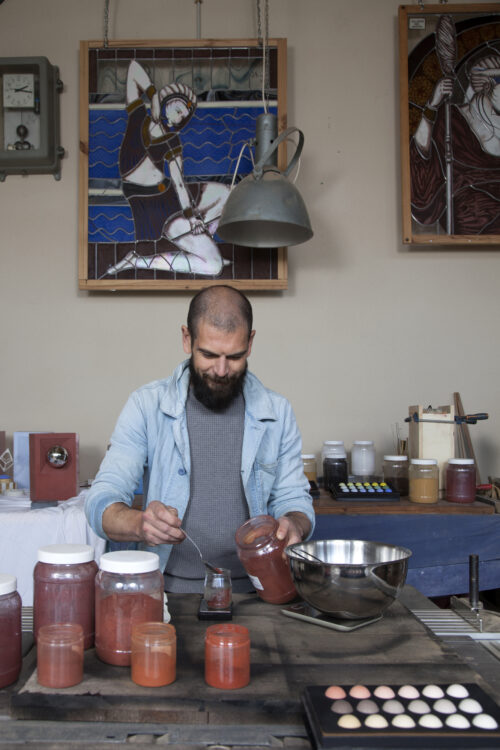
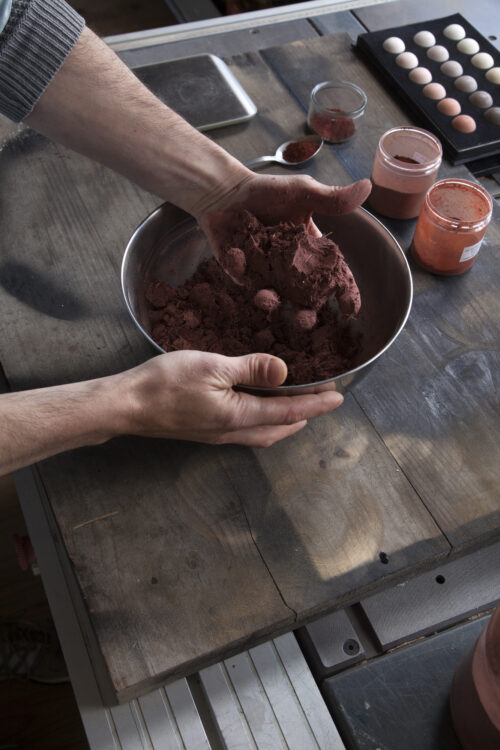
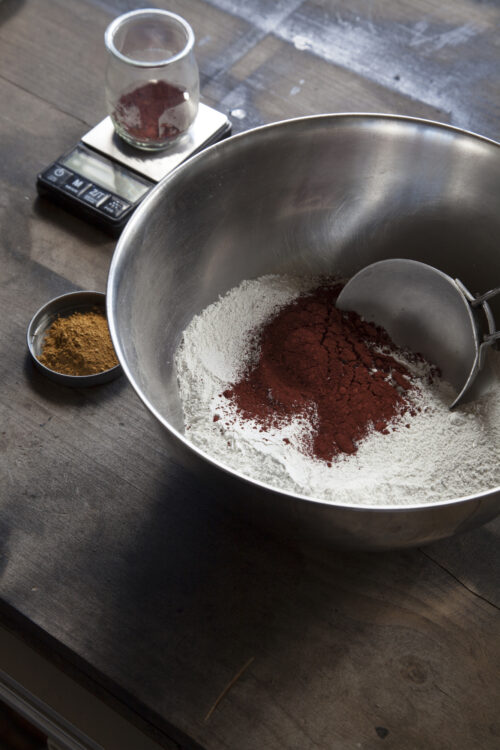
“Quentin does all the concrete. All the mold design comes from his experience as a model maker. We’ve adapted the silicone mold-making technique to our needs.”
“The intelligence of the hand speaks to us. The opposition between the manual and the cerebral makes no sense in reality.”
“Quentin makes his mix in concrete and pigment proportions, homogenizing the mixture before adding water. We call it ‘concrete’, but it’s actually fiber-reinforced mortar.”
Nous utilisons des cookies pour vous garantir la meilleure expérience sur notre site web. Si vous continuez à utiliser ce site, nous supposerons que vous en êtes satisfait.