Inhabiting Tomorrow: 24 hours to imagine the future of cities
An open-air laboratory at the crossroads of architecture and the ecological transition
By our reporter, Justine Villain - Lefrançois
At a time when issues relating to housing, the ecological transition and community cohesion are at the heart of contemporary concerns, BNP Paribas and the French Academy in Rome - Villa Medici have co-imagined Inhabiting Tomorrow, a new forward-looking event at the crossroads of architecture, ecology and collective intelligence. Part of the Festival des Cabanes program, this unique series of encounters brought together artists, philosophers, architects and economic players to discuss the same question: how can we think about and build the habitat of the future? Sloft magazine was there. Here's the story.
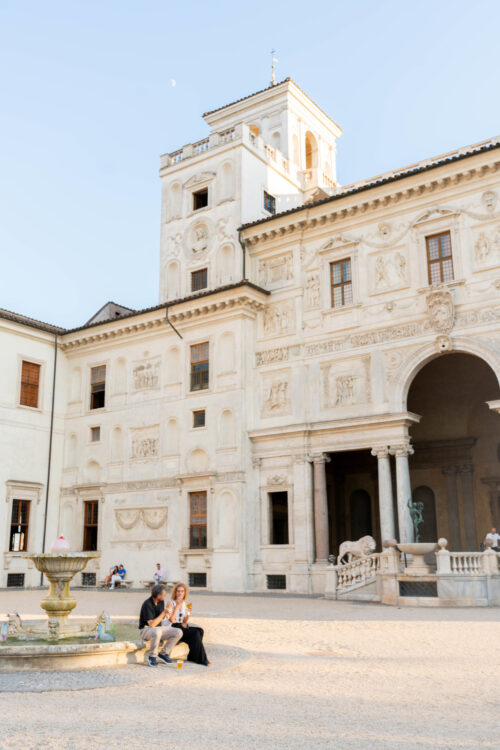
"Can we still build?" This deliberately provocative question from Ghislain Mercier: Director for environmental Transformation, BNP Paribas Real Estate - Property Development, was the opening theme of the first edition of Inhabiting Tomorrow, held on July 3rd and 4th. Faced with the climate emergency, the housing crisis and the collapse of social ties, architects, researchers, thinkers and entrepreneurs opened up a space for dialogue and debate, in an attempt to draw together the contours of the habitat of the future. Punctuated by round tables, performances and inspirational readings, this unique event took root in a place charged with meaning: the Villa Medici, a true jewel of the Renaissance, with its hanging gardens overlooking the Roman city. Through Inhabiting Tomorrow, BNP Paribas and Villa Medici unveil a partnership at the crossroads of environmental and social action, future casting and artistic creation.
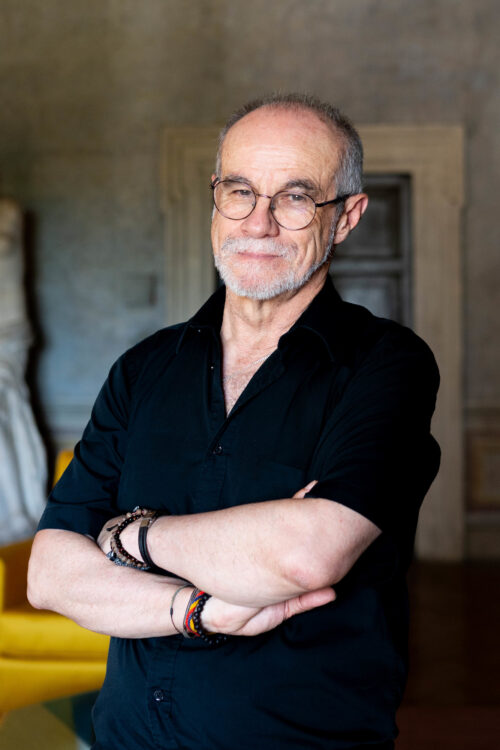
Sam Stourdzé, Director of the French Academy in Rome – Villa Medici and Elena Goitini, CEO of BNL and Head of BNP Paribas in Italy, inaugurate the first edition of Inhabiting Tomorrow.
What city better than Rome, which embodies the habitat of yesterday with its two millennia of built heritage, to talk about the habitat of tomorrow? Structures that are still in use, such as the Pantheon with its famous dome of tufa and concrete, sit alongside buildings that haven’t lasted a century or even half a century. The reason: “multi-layered” materials that can’t be repaired, leading to an acceleration in the consumption of buildings that for so long embodied permanence. How did we get here?
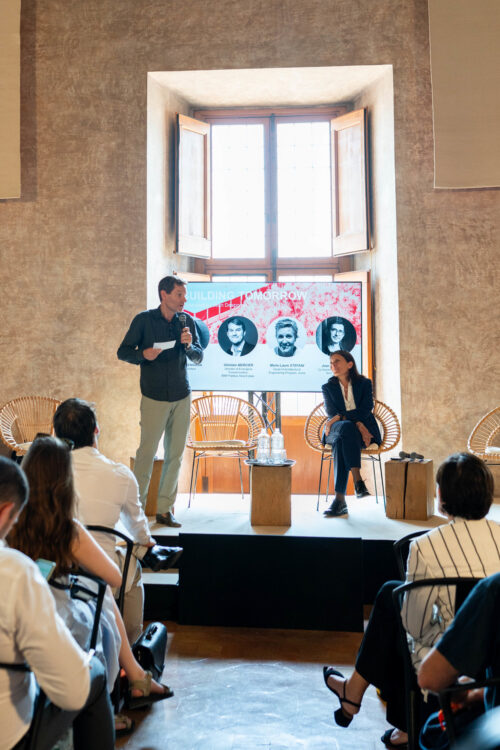
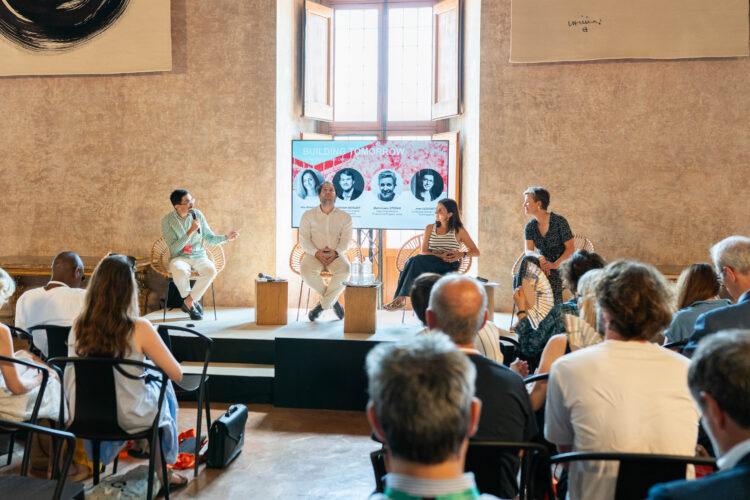
“The city of tomorrow is already here, but it’s not well suited,” warns Ghislain Mercier, by way of introduction to the inaugural round table, moderated by Jean Desportes, Editor-in-Chief of Sloft Magazine. “The question to be asked is no longer just how to build, but whether to build at all.” While the facts are clear (one-third of emissions from the Real Estate sector are due to construction and two-thirds to use) the trajectory is clear. The sector’s carbon footprint must be halved by 2030. Faced with these figures and the limits of an outdated model, discussions are converging on new construction methods. “For decades, we have conceived of architecture as an idea to be placed on virgin ground. It’s time to listen to the material”, argues architect Alia Bengana. She advocates the emergence of a new vernacular, based on old but reinvented materials: stone, earth, wood, hemp. “Reusing is not an innovation, it’s an ancestral gesture.” Marie-Laure Stefani, a teacher-researcher at Junia, l’école des transitions, also shares this back-to-basics approach. She advocates the rigorous triple zero approach: zero carbon, zero waste, zero impact: “In nature, there is no waste. Why create it?” At the end of these first exchanges, the course was clear: the habitat of the future is intended to be a living, resilient and frugal ecosystem. The tone for the two days was set.
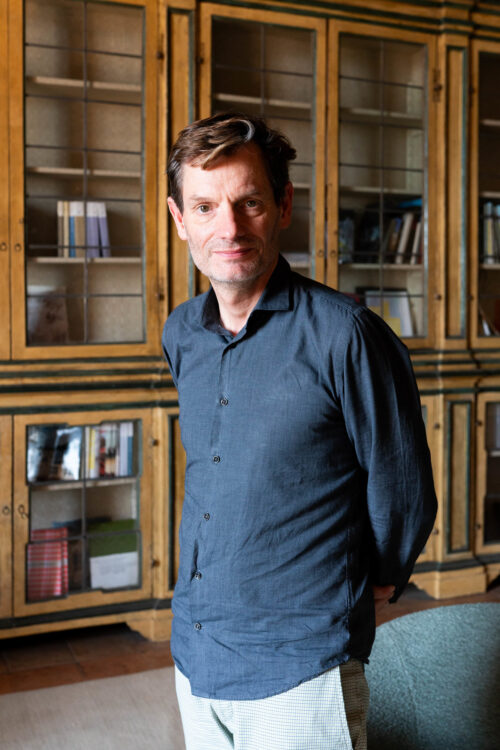
The first round table of the day brought together Ghislain Mercier: Director for environmental Transformation, BNP Paribas Real Estate – Property Development, architect Alia Bengana and Marie-Laure Stefani, teacher-researcher at JUNIA, l’école des transitions, in a discussion moderated by Jean Desportes, Editor-in-Chief of Sloft Magazine.
After exploring the issues surrounding construction and resources, the discussion shifted to another essential pillar of habitat: people. The day’s second round table refocused on the collective. For “inhabiting is first and foremost about living together,” as Tara Heuzé-Sarmini, founder of Commune, the first coliving residences dedicated to single-parent families, reminds us in her introduction. The social entrepreneur denounces a city designed “for able-bodied men without children” and which has become unlivable for the most vulnerable. “Single-parent families, the elderly and precarious students no longer find their place in an increasingly individualistic city.” Her response? To imagine an architecture of connection, based on shared uses: collective kitchens, shared roofs, communal gardens. These are all places where people learn to live together again. For Tara Heuzé-Sarmini: “done is better than perfect. We need to recreate links, not towers,” she insists. In the same vein, Moussa Camara, founder of the Les Déterminés (the association that supports entrepreneurship in suburban and rural areas) puts working-class neighborhoods back at the heart of the debate. All too often absent from development policies, they nonetheless abound in overlooked potential. “We’ve got ground floors to reinvest, motivated young people and know-how to pass on. We don’t need to demolish everything to recreate. Before taking care of the buildings, we need to take care of the people.”
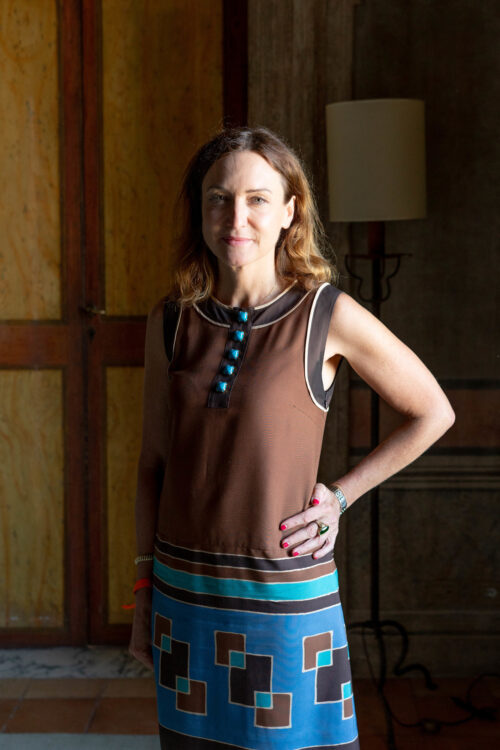
It is precisely these reflections that BNP Paribas wanted to encourage by co-creating Inhabiting Tomorrow. “It’s not just an event. It’s a backbone,” asserts Anne Pointet, BNP Paribas’ Head of Company Engagement. The project is part of an in-depth transformation process, designed for the long term as much as for action: “I think it’s good to take a little break from time to time, to breathe, to sit back, to think, to project, but not simply in an intellectual or conceptual way, to project in action.” An approach consistent with the Group’s DNA: “we’re a major financial institution with a 200-year history, so we look to the very long term. Sustainable housing is a natural way to achieve this long-term vision.” But beyond strategies, there is one overriding conviction: that transformation begins with a tangible experience: “Emotion enables action.”
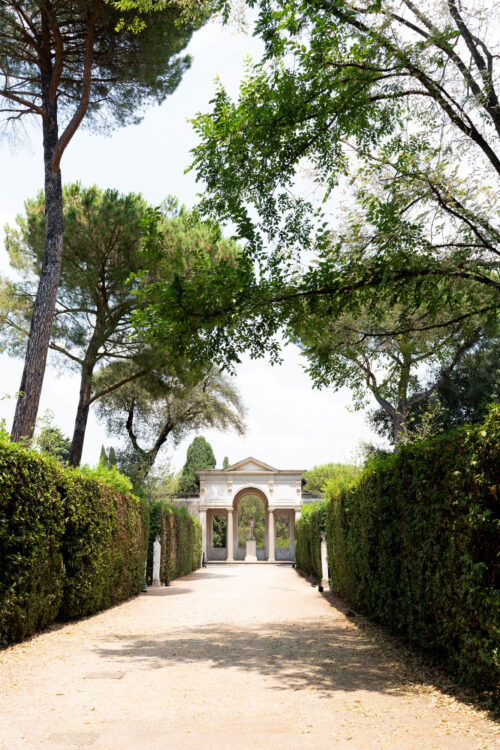
If nature is at the heart of the discussions, Villa Medici’s hanging gardens are more than just a backdrop: they are an integral part of the event. You can walk through them, experience them.
Interview with Anne Pointet, BNP Paribas’ Head of Company Engagement, who shared her vision and the meaning of the Inhabiting Tomorrow event with the Sloft Magazine team.
As night falls, the historic gardens of Villa Medici come alive for the Nuit des Cabanes – Inhabiting Tomorrow: an interlude of festivity, action and art (See our dedicated story).
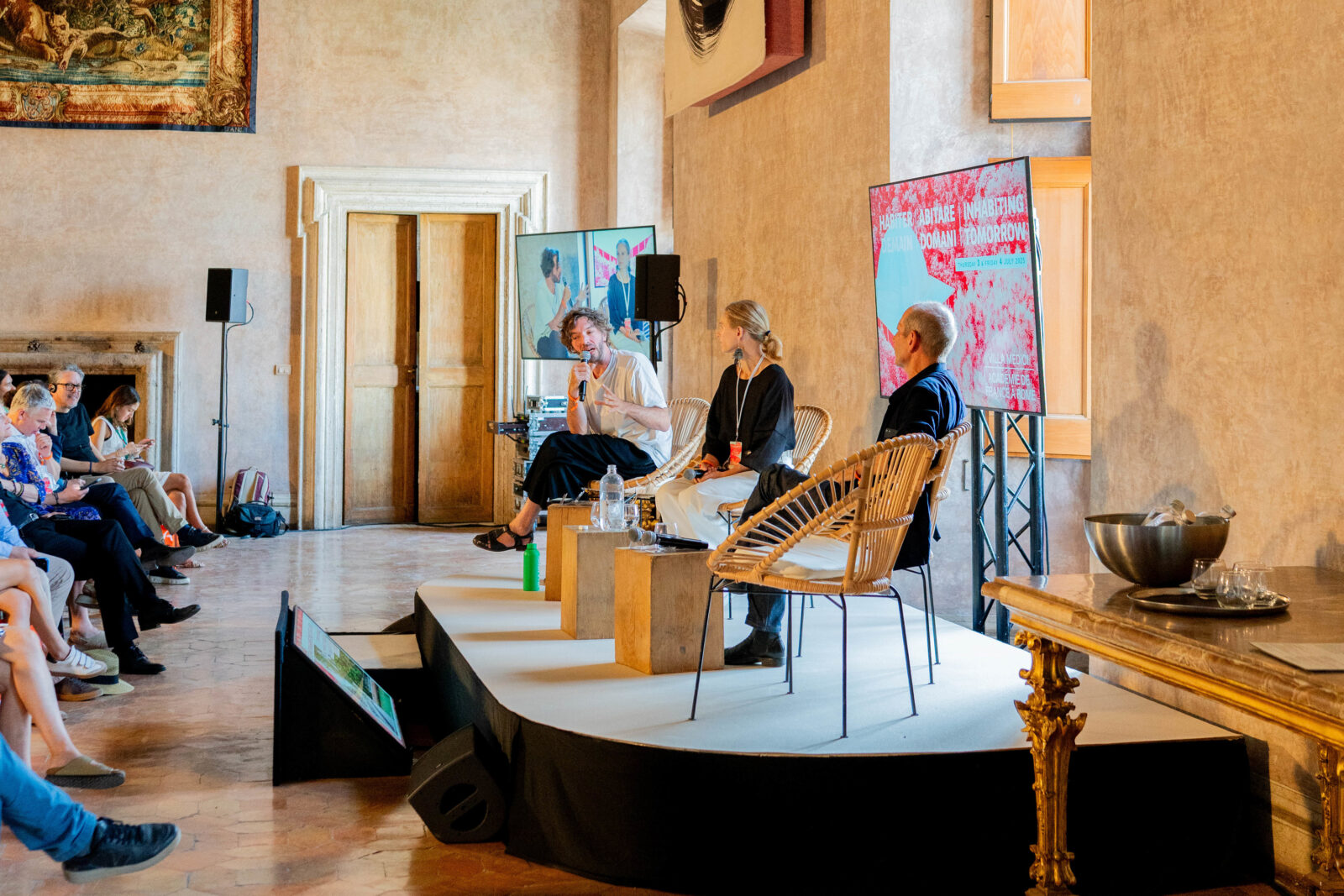
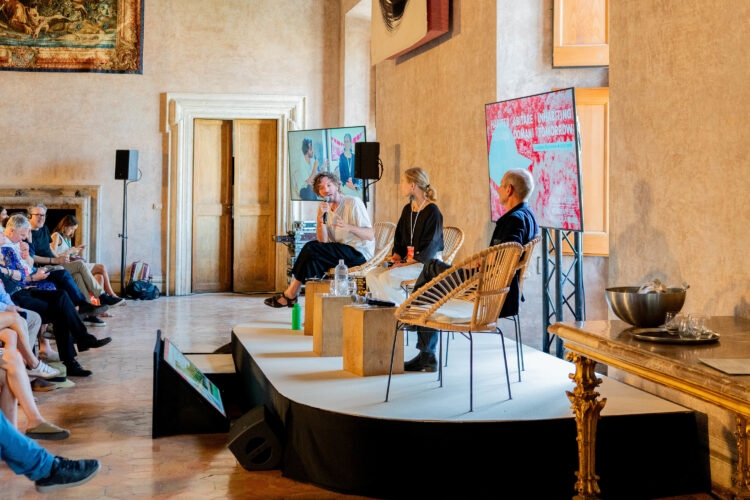
The following day, the discussion took a more territorial turn: “in a flood-prone region, you have to live with flooding, not against it,” asserts architect Éric Daniel-Lacombe, defending an architecture capable of coping with the vagaries of the climate rather than countering them. Opposite him, Alice Leguay, of the Circular Bioeconomy Alliance, calls for a biogeographical approach to the city, rooted in the ecological specificities of each territory and landscape: “some radical changes are essential. We must allow systems that no longer serve us to die. Regeneration can only exist if we agree to compost things.” But behind this break, an essential question remains, one that is ethical as much as political: “how can we be a good ancestor for the seventh generation of humans to come?” It’s a safe bet that the answers will lay the foundations for a habitable future.
Second day round table: architect Éric Daniel-Lacombe and Alice Leguay, from the Circular Bioeconomy Alliance, took part in a discussion moderated by Julien Tauvel, designer and co-founder of studio Imprudence.
The last expert to speak, Carlos Moreno, doesn’t beat about the bush. For the professor-researcher and theorist of the fifteen-minute city, it’s time to break with the old reflexes of twentieth-century urban planning. In his view, the rigid separation of functions, the zoning of uses and the systematic distancing of everyday services have deepened social and territorial divides. Grave errors: “we’re living in the 21st century with 20th-century paradigms: zoning, functional separation, inherited from the Athens Charter. We need to move from infrastructure-oriented urban planning to service-oriented urban planning.” His model is based on multi-faceted proximity: social, functional and geographical. His vision of the smart city? A reversible, regenerative city at the level of its inhabitants: “it’s not because you have a lot of square meters indoors that you have a good quality of life. The centrifugal city pushes the most precarious ever further away from essential services.” But despite this observation, Carlos Moreno remains optimistic: “as Italian philosopher Antonio Gramsci would say,we must combine the pessimism of reason with the optimism of will.” And Inhabiting Tomorrow was the concrete expression of this: a space where thinking about the complexity of the present enables us, in spite of everything, to project habitable futures. And therefore desirable.
Inhabiting Tomorrow is also about letting more radical voices be heard, like that of Carlos Moreno, theorist of the 15-minute city.
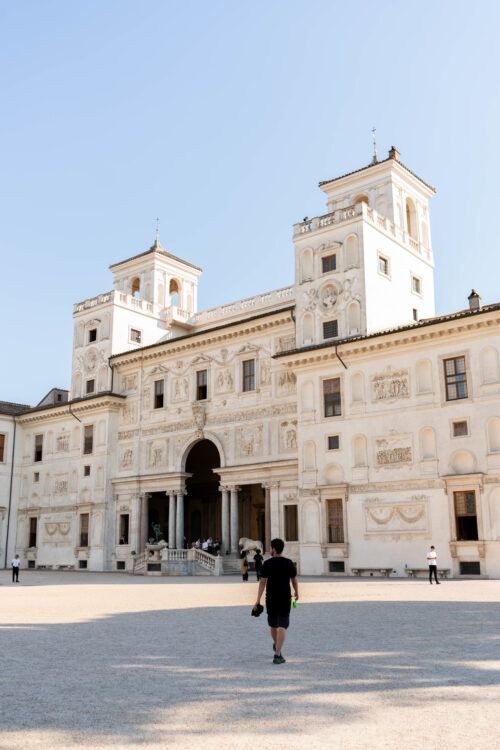
At Villa Medici, architecture becomes an art of thinking as much as a gesture of building. The venue, both symbolic and open, played a central role in this first edition.
“We understood why we had to do it here: to unite the riverbanks, the past, the present, the economic and cultural worlds, the different generations,” confided Anne Pointet as the event drew to a close. And Sam Stourdzé adds: “Inhabiting the city means thinking about it, imagining it, staging it. That’s what we modestly did together during this new, highly interactive event.” Two days of discussions will obviously not have been enough to resolve the multiple crises that plague our ways of living. But they will have enabled us to outline avenues, share visions and open up different worlds. And to impose the conviction that tomorrow’s habitat will be neither vertical nor above-ground. It will be attentive, restorative and composite. It will link materials, generations and uses. It will compose with, rather than deny, territories. And above all, it will reinstate the human and the living at the heart of every project.
Sam Stourdzé, Director of the Académie de France à Rome – Villa Medici, concludes with the following words: “Inhabiting the city means thinking about it, imagining it, staging it. That’s what we modestly did together during this new, highly interactive event.”
Villa Medici hosted the first edition of Inhabiting Tomorrow, laying the foundations for a long-term reflection on the habitat of the future.
To learn more, check out our exclusive video report:
Nous utilisons des cookies pour vous garantir la meilleure expérience sur notre site web. Si vous continuez à utiliser ce site, nous supposerons que vous en êtes satisfait.