Home Page » Reports » Level up, 75 m² in Ghent
Natalie and Hannes’ machine for living in Ghent, Belgium
75 m²
Ghent, Belgium
Contemporary classic
Industrial
Studio Haan

For Sloft+ members only

This Home Tour is from
Sloft Edition 03
Residual spaces in a city may include corner plots — and their unsuspected advantages. Natalie Allaert and Hannes Oppeel from Studio Haan were not wrong: "We’ve always had a weakness for corner houses, precisely because they are much brighter than a traditional row house in the city." A few years ago, the architect couple, who both live and work together (incidentally, their office is also in their home), started looking for a new house in their area in Ghent, which they liked for its central location and neighborhood vibe. They came across an ad for a house in very a rundown state, but that didn’t discourage them. However, the house was oddly divided into three apartments with a shared kitchen and living area; the rooms were small and there wasn’t a garden. "But we saw its potential." They did, however, have one conviction: to put the living space on the upper floors, "eleven meters above street level".
The story behind this project is more of an expedition than a leisurely cruise. When Natalie and Hannes bought the house, they moved in after an initial phase of urgent renovation works.
"Because the house was in bad shape, we decided to strip it to its bare essentials." During demolition works, the floor structure turned out to be so damaged that it needed replacing.
"Instead of letting this bring us down, we saw it as an opportunity and rolled up our sleeves." And so came about the idea of structuring the house in half-levels, to create a
"machine for living in" which puts the emphasis on the function of each room and open plans.
"The building’s modest 21 square meter-footprint and the narrow site resulted in a more vertical way of living." No dividing walls, just levels.
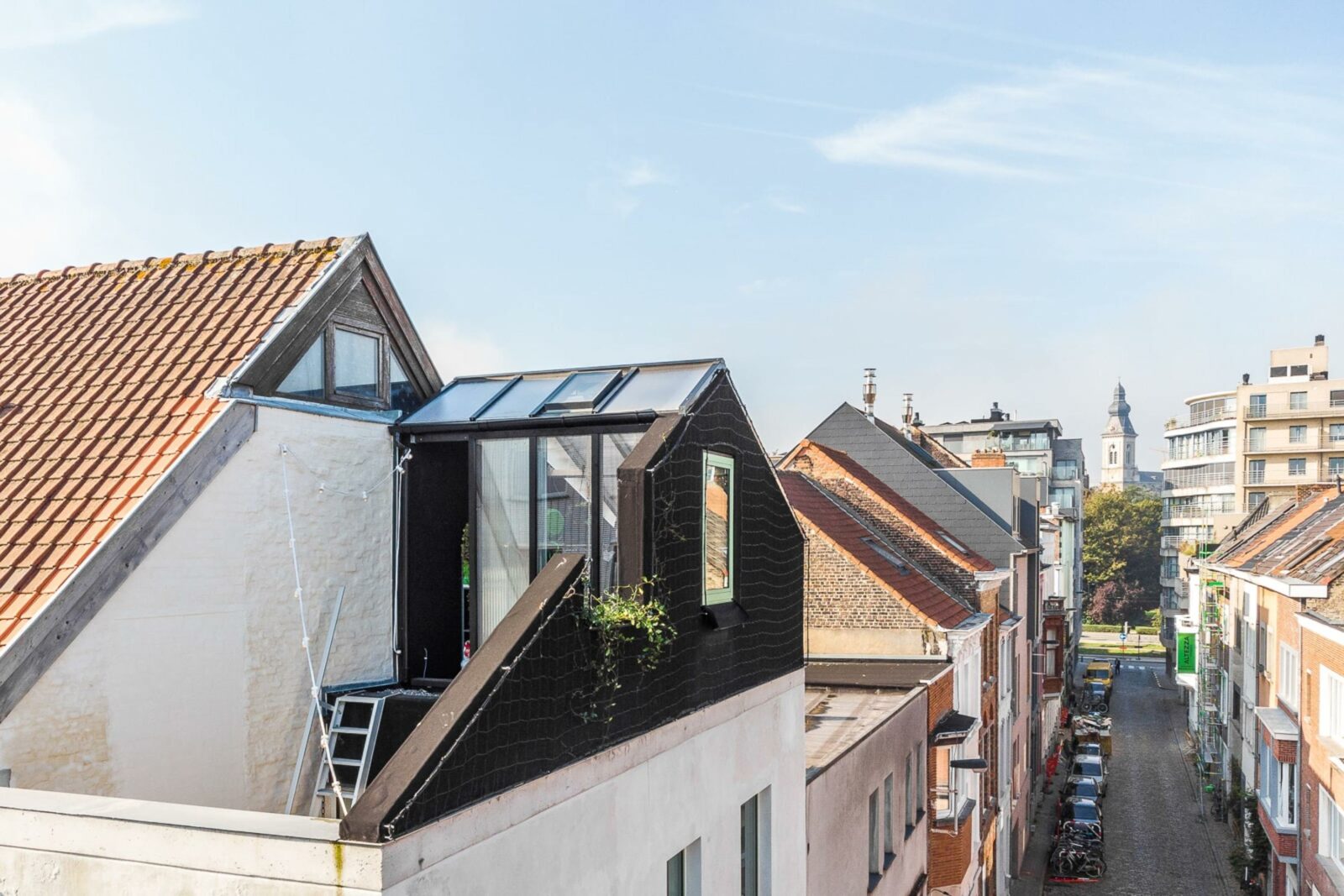
At the end of 2019, after living a somewhat simple lifestyle in the house for five years, in order to get a feel for the place and think about what was possible in terms of urban ecology, they left. And so, the remodeling phase could begin, including redesigning the interior space, replacing the roof with a terrace (thus creating an extra 10 square meters), building a greenhouse (8 square meters more!), as well as installing fittings to give the house a real bio-climatic dimension. Natalie and Hannes define their home/office as an experimentation that brings a DIY element to the fore. With a little elbow grease, building on a tight budget is doable.
"Urban living has become a challenge, especially for young people. It’s expensive, space is limited, and the grass is always greener in the suburbs. Instead of running away from it, this corner house embraced all the downsides of living in the city in a very creative way."
Natalie Allaert and Hannes Oppeel