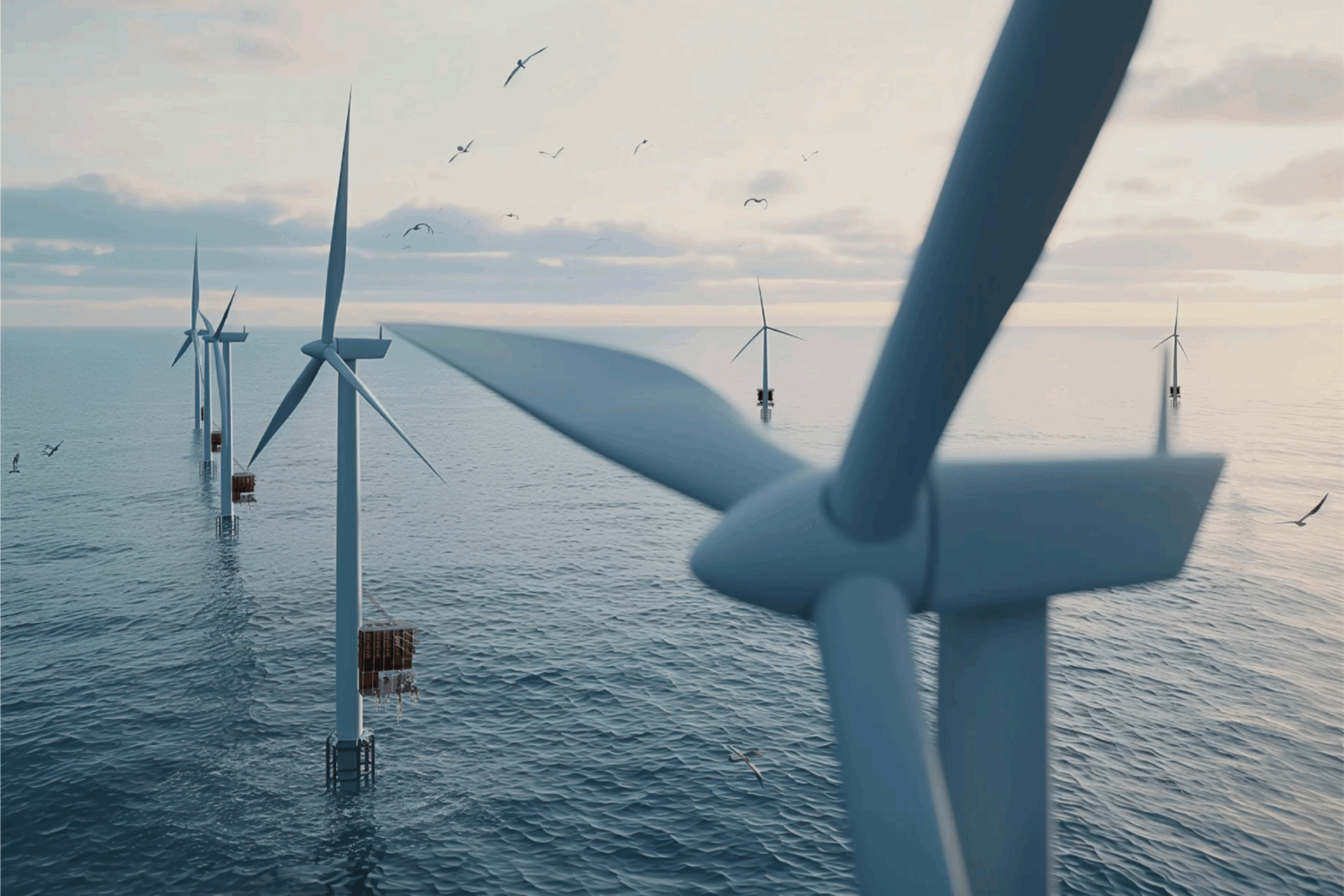
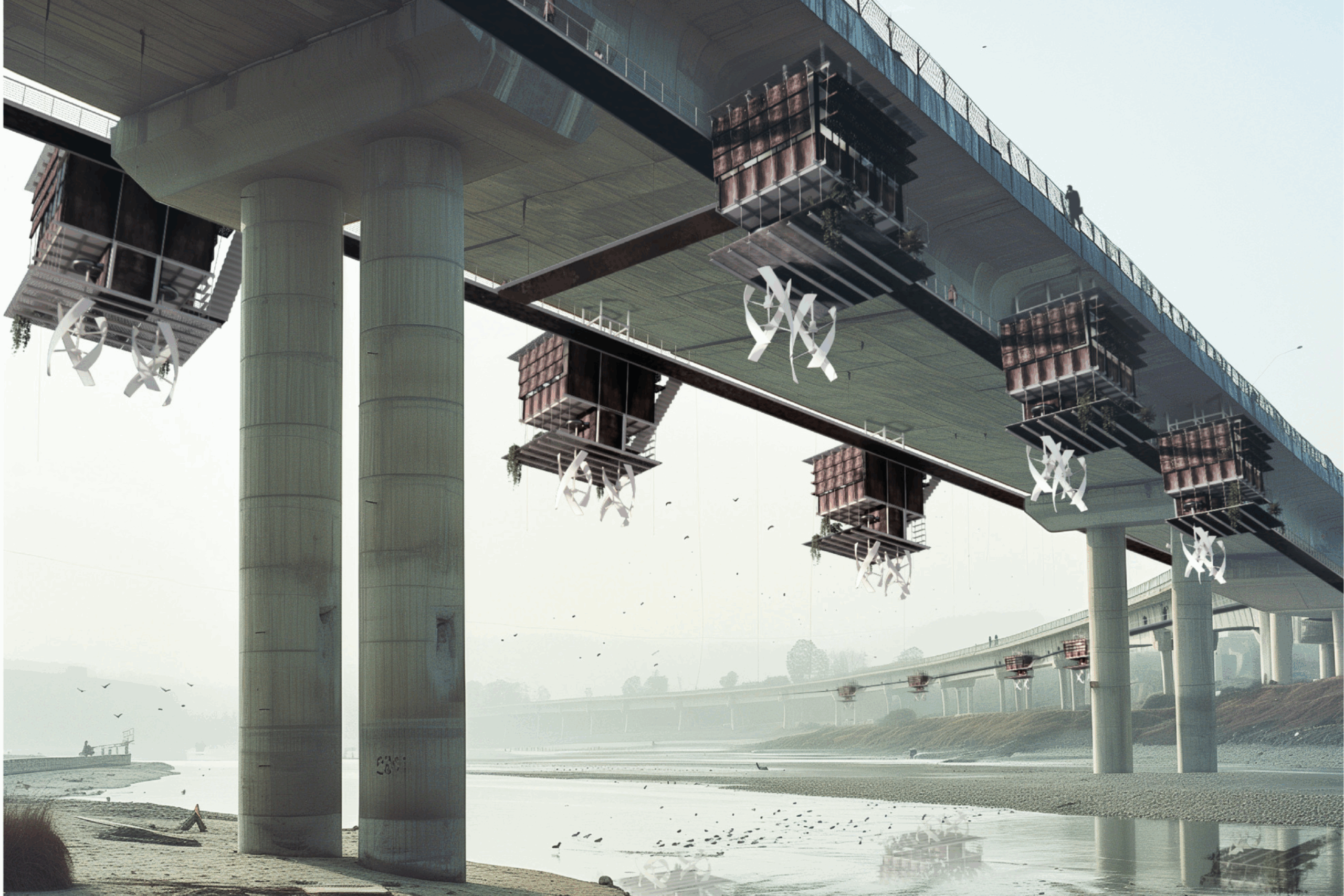
What if your house hung from a wind turbine or under a bridge?
The concept: using existing infrastructure to house those in need, at a lower cost. 25 m² A’IDA
The project put forward by Paris and Grenoble-based agency A’IDA’s is a reversible housing module that can be moved around as needs arise.
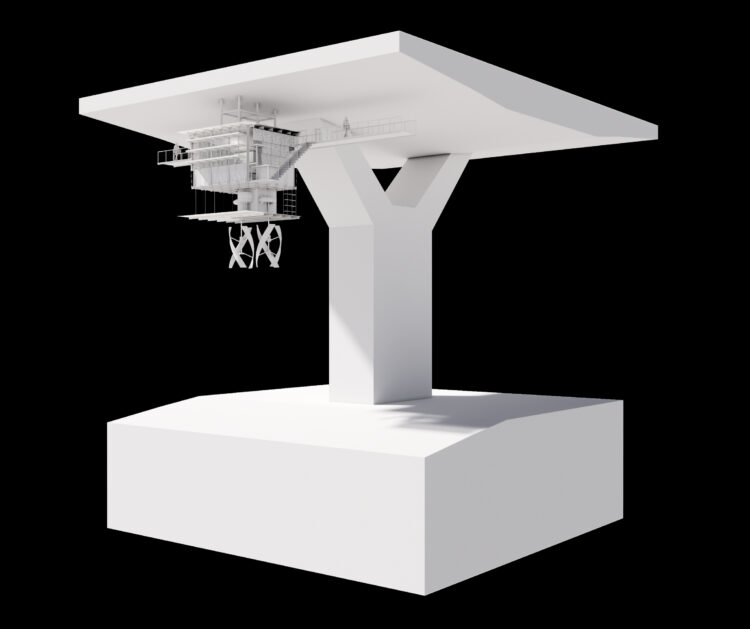
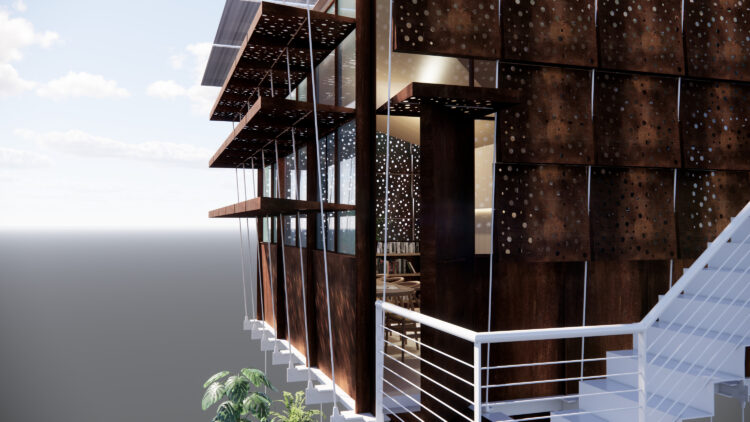
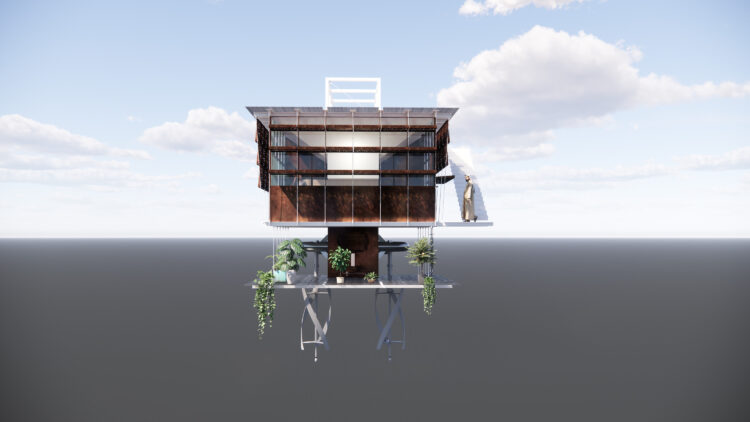
Designed to be attached to existing infrastructure, this micro-habitat can be suspended from bridges, dams, or wind turbines.
This integration makes it possible to make use of previously unused spaces, eliminating the need for foundations in the hope of limiting the ecological footprint and construction costs.
The construction is based on a lightweight, fully prefabricated structure. Thanks to its compact dimensions, the shelter does not require special transportation, thus facilitating logistics.
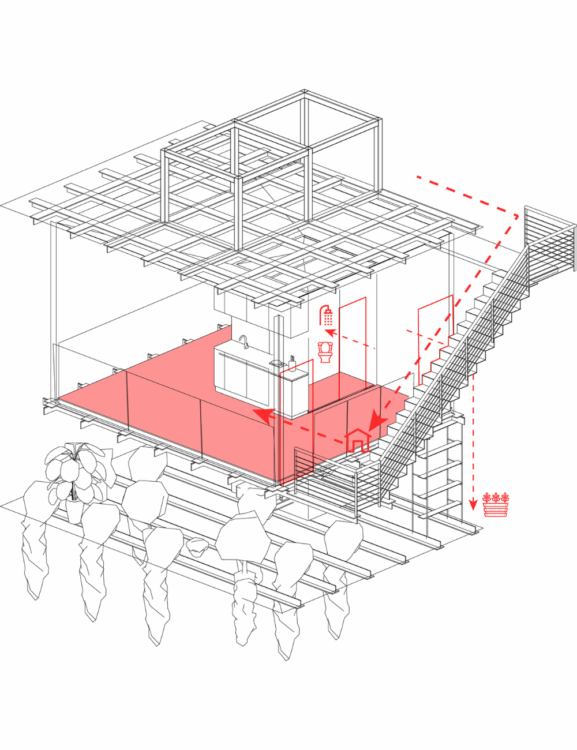
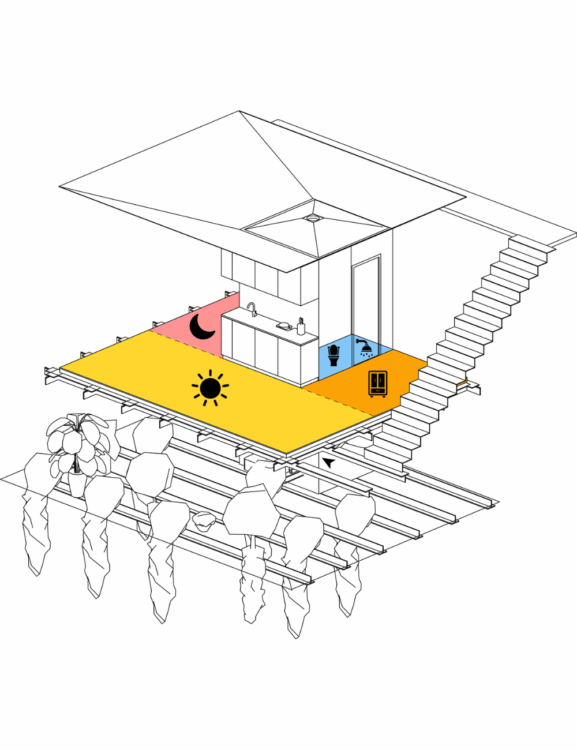
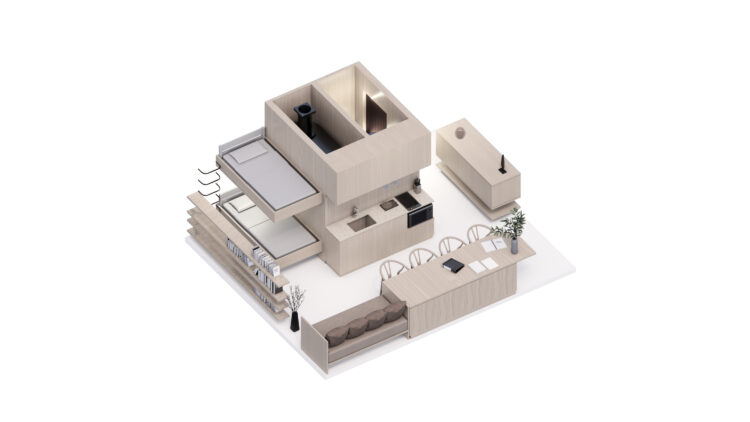
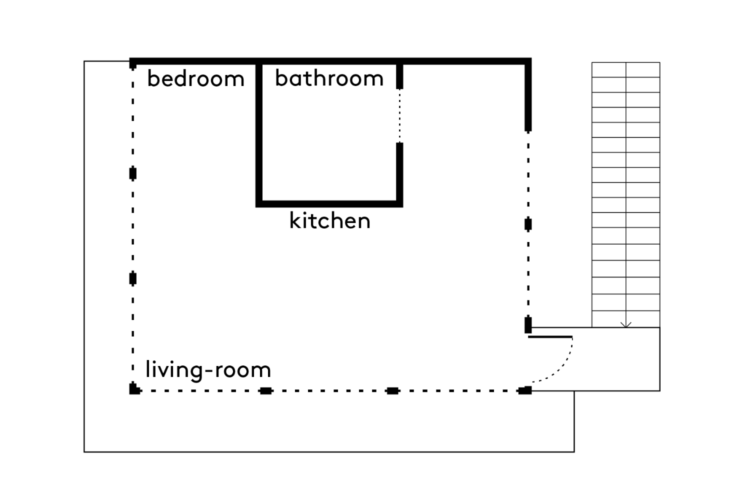
The micro-house is laid out vertically to maximize space and optimize living areas. The entrance is via the terrace, which includes a vegetable garden and a utility room, leading to the lower level, sheltered from noise and prying eyes. Wet rooms (kitchen, bathrooms, and WC) are located in the center, with water management becoming a symbol of current concerns. The storage areas, living room, and bedroom are built around them, to take full advantage of the glass facades.
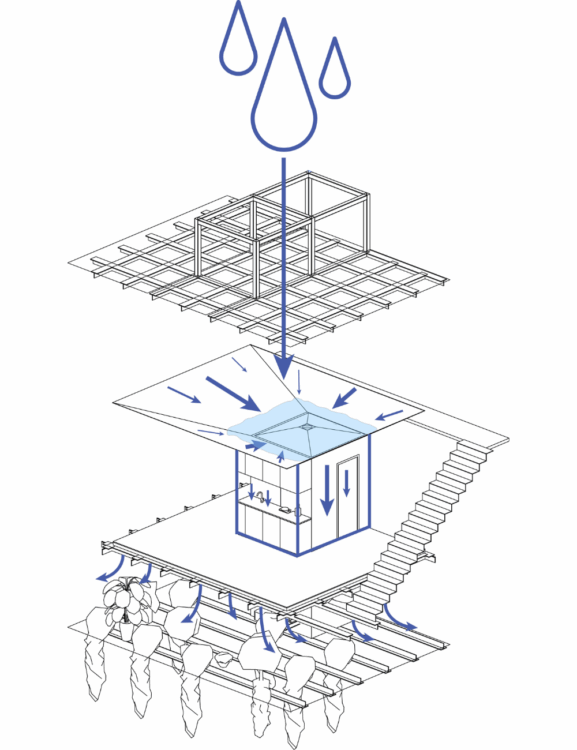
The design incorporates an ingenious water management system, where the roof collects rainwater, which is then directed to the wet rooms in the central part of the house. This area is equipped with a filtration system that purifies the water before storing it in a large-capacity tank. After use, gray water is transported to an ecological treatment system located in the lower part of the structure, where it is reused to irrigate the vegetable garden and terraces. This closed cycle promotes self-sufficiency and contributes to the preservation of natural resources.
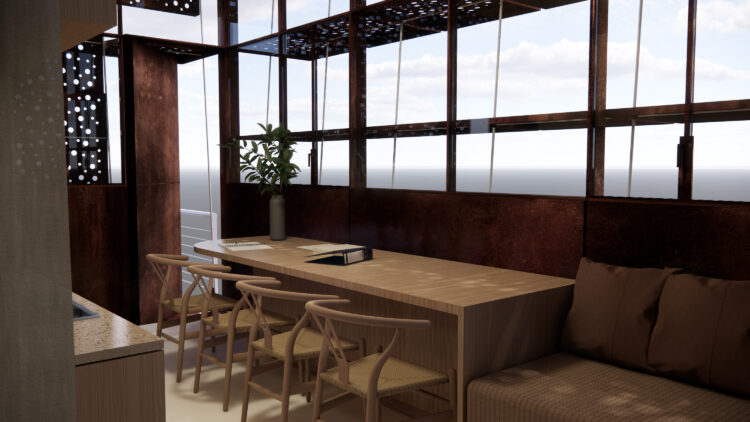
The use of retractable furniture maximizes the use of available space, providing greater flexibility and functionality.
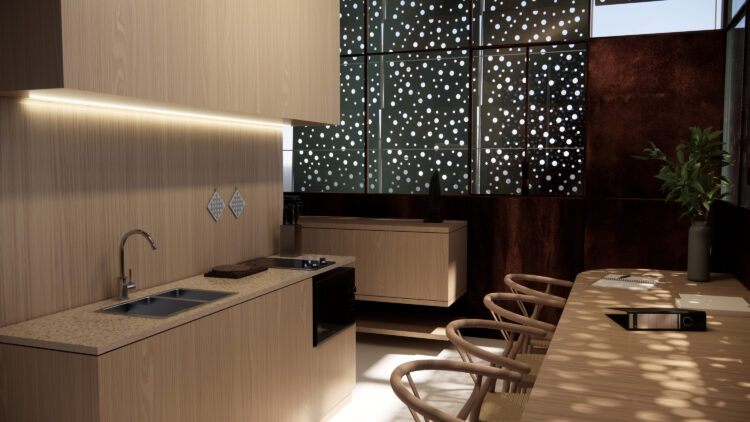
The facades are composed of perforated insulation panels, such as Kingspan. These factory-prefabricated sandwich panels offer multiple advantages: their technology is at the forefront of the industry in terms of thermal efficiency, fire safety, and durability, all at a lower cost.
Custom-made furniture, such as foldaway beds, extendable tables, and collapsible shelves, can be easily stored away when not in use, freeing up space for other activities.
The interior design allows for optimal installation in confined spaces and customization according to the specific needs of residents.
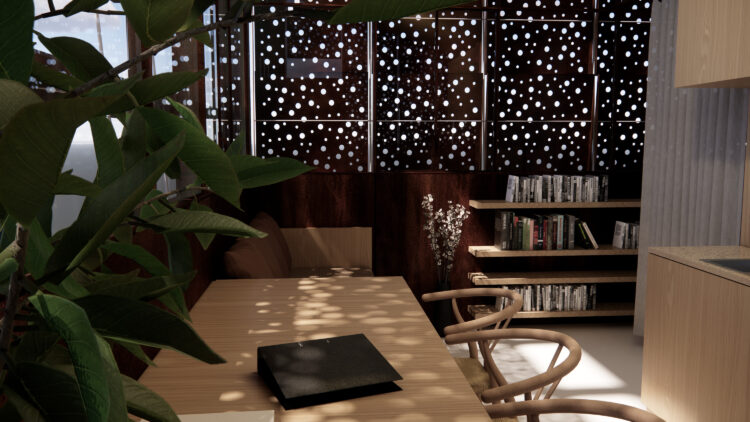
The perforations in the facade panels allow light to enter and create a changing backdrop throughout the day.
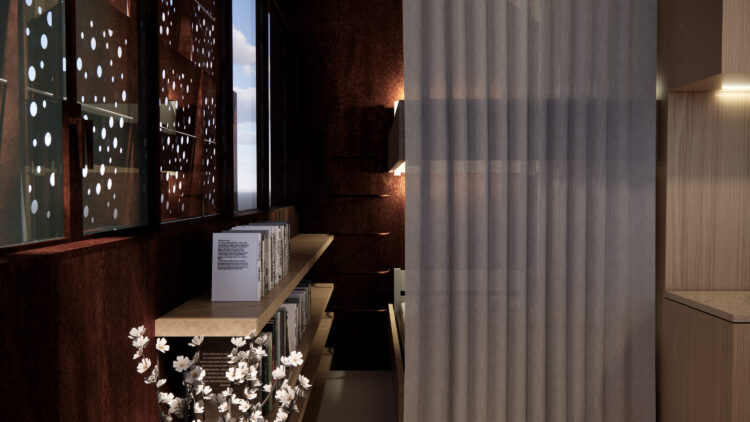
The sleeping area is separated from the living area by a curtain. There are no partitions or doors in order to maintain smooth traffic flow between the different areas and maximum modularity.
By combining several modules, these microhabitats can be adapted to accommodate larger families. Thus, these spaces could eventually evolve into communities of microhabitats, providing urban refuge for people in need. Are we witnessing the future of housing, adaptable to environmental changes and predicted natural disasters? Or is it more of an unusual Airbnb-type habitat? Tell us what you think!
Nous utilisons des cookies pour vous garantir la meilleure expérience sur notre site web. Si vous continuez à utiliser ce site, nous supposerons que vous en êtes satisfait.