
 For Sloft+ members only

When architect Lisa Castagnino and her husband Jonathan were looking into their first real estate acquisition, the paradox of lowering their standards while increasing their comfort came as a revelation. “When we embarked on this project, we had no intention of investing in a ground-floor unit, let alone a street-facing one. First and foremost, because of the noise, but also because of the proximity to the outside world … not to mention safety concerns. When we visited this property, however, we almost immediately reconsidered our point of view!”
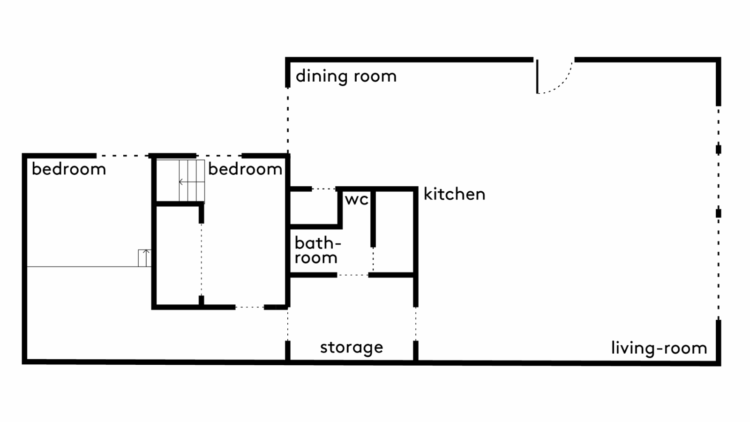
With its high ceilings, the former workshop/boutique, located in a cul-de-sac in the 20th arrondissement and already converted into a private home, benefited from a triple exposure as well as an ideal surface area (78 square meters) for the couple and their daughter: “We quickly realized that this situation had its advantages, and not the least of which: carrying a small child up and down stairs can, for example, prove arduous…” The apartment also benefits from more natural light than some upper-level apartments, all year round, thanks in part to the proportion of glazed surface area. As the dead-end street is wide, the amount of sunlight is even greater. It’s also quiet, with very little traffic. Two years after their purchase, the young parents explain that they can let five-year-old Carmen ride her scooter outside with complete peace of mind: “As a pedestrian street, it also serves as an extension of our home. Like many of our neighbors who live on the first floor, we bring out a table in the summer, eat outside…” A relationship with the outside environment rarely seen in such an urbanized area as the capital.
The couple had chosen the 20th arrondissement for its more affordable real estate prices and diverse community. They adopted the space as their playground: “This renovation was my first project as a freelance architect,” confirms Lisa. . “There was something energizing about the dual role of project manager and client, even if it sometimes made it hard to set limits, given the urge to explore all the possibilities…” However, she soon decided to reduce the bedrooms to their bare essentials (“We just sleep in them!”), opting instead for a deliberately open-plan living space. Jonathan and Lisa’s guiding principle is conviviality: they love cooking and entertaining, and don’t see themselves doing so in rooms that are compartmentalized, cramped and reduced to a single function. Their approach, which is almost anthropological, has something tribal about it, with every member of the family sharing the same space. Lisa continues: “Jonathan works from home, I work in the office and Carmen is at nursery school during the day, but the rest of the time, as soon as the three of us are home, we want to be together.
Our daughter has her own place where she can grow up, but for the moment she prefers to hang out with us while she draws or plays.” Which goes to show that compact living can really strengthen family bonds...