This 71-square-meter pied-à-terre had to be functional and pragmatic, with particular attention paid to insulation. Its transformation was entrusted to Atelier Apara.
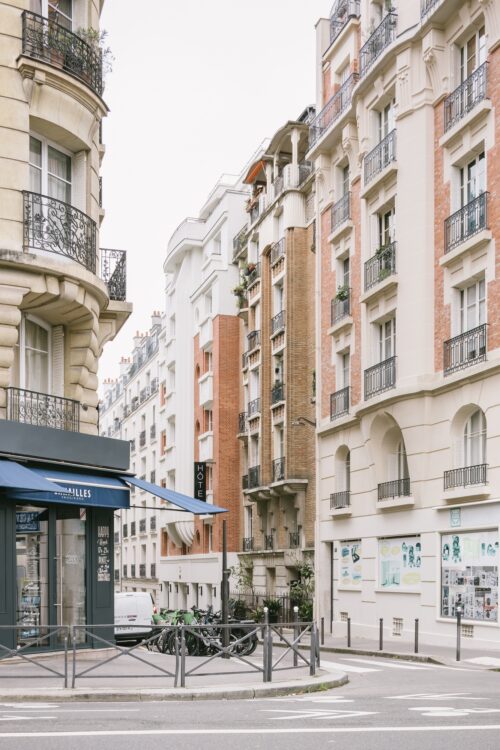
The apartment is located in a post-war building, constructed between 1950 and 1960. With windows facing north and southwest, it benefits from a generous double exposure.
Unoccupied for several years, the property required a complete renovation. Its layout also needed to be redesigned to allow for the creation of a potential second bedroom.
The apartment was designed for Kevin, 28, an administrative and financial manager in the music industry.
Raw, reflective materials like stainless steel capture and diffuse light throughout the living space.
The kitchen is organized around a central stainless steel island, which is mobile and can be used as a workstation, dining area, and entertaining space. It can be easily moved to free up space. The omnipresence of white enhances the brightness of this minimalist space.
The 10×10 cm white tiles reinforce the project’s minimalist aesthetic. According to Charlotte Guillochon, who co-founded Atelier Apara with Victor Mesguich, “stainless steel was the obvious choice as the main material for the apartment. In addition to its aesthetic qualities, it is extremely durable, which is essential for a space like the kitchen. Its cool, industrial look creates an interesting contrast with the warmth of the parquet flooring and the Parisian charm of the apartment.”
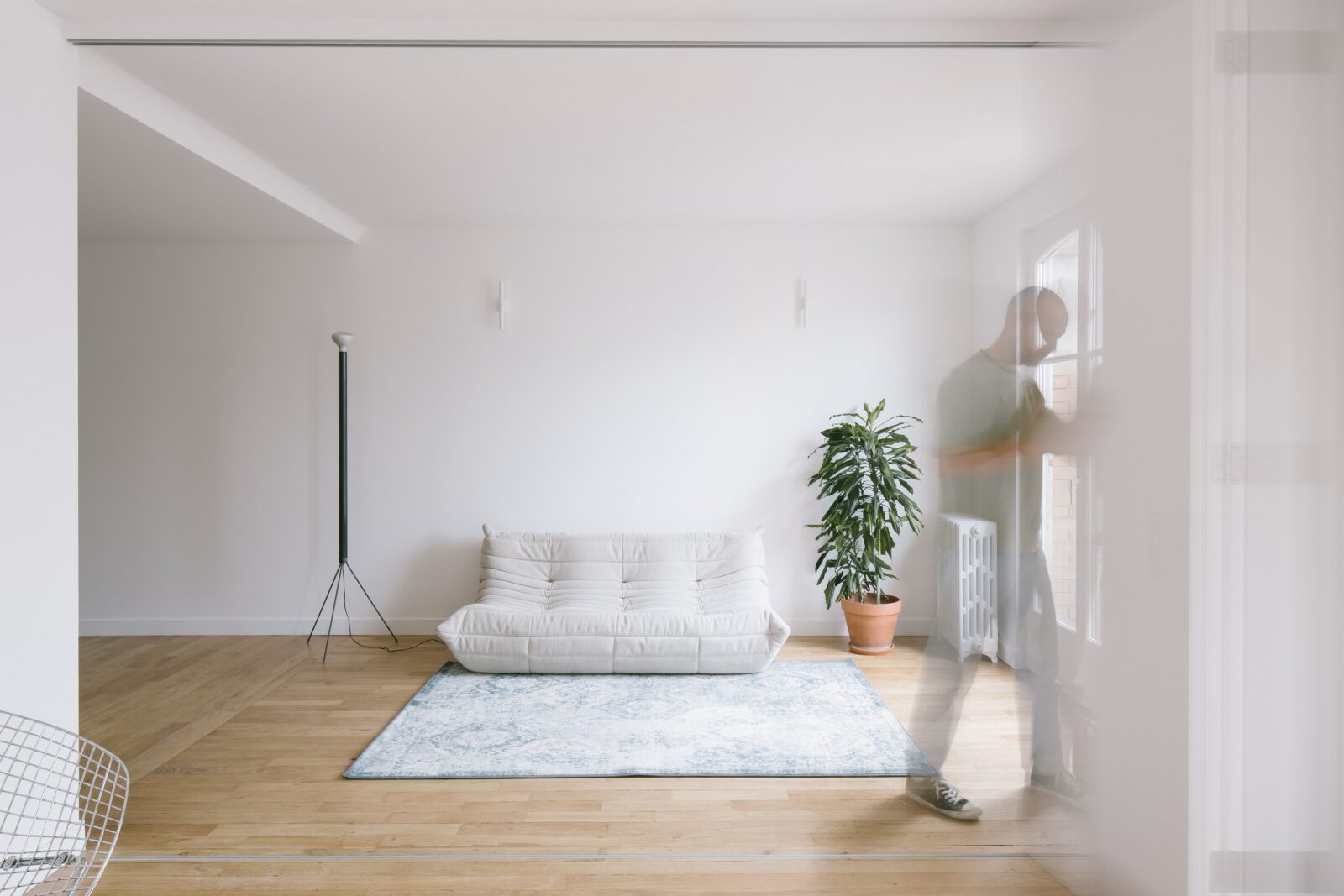
The accordion door system allows the living room to be partitioned off to create a second bedroom, when needed. In living room mode, a pearl gray three-seater Togo sofa, produced by Ligne Roset and designed by Michel Ducaroy, welcomes visitors.
The unit can thus be adapted to different purposes and uses.
The bathroom continues the theme of raw, durable materials. Moisture-resistant stainless steel is favored for its visual and functional qualities, as are white ceramic tiles, whose rectangular shape echoes the square tiles in the kitchen.
A glass block wall protects the bathroom from splashes while ensuring plenty of light in the shower. The base is made of gray-toned Terrazzo tiles, echoing the stainless steel used throughout the rest of the apartment.
The room is white and minimalist. The architects have also carried out the “invisible” part of the renovation. Uninhabited for several years, the apartment has been upgraded from class F to class C thanks to interior wood fiber insulation (10 centimeters on the perimeter walls), preserving the Art Deco facade.
Nous utilisons des cookies pour vous garantir la meilleure expérience sur notre site web. Si vous continuez à utiliser ce site, nous supposerons que vous en êtes satisfait.