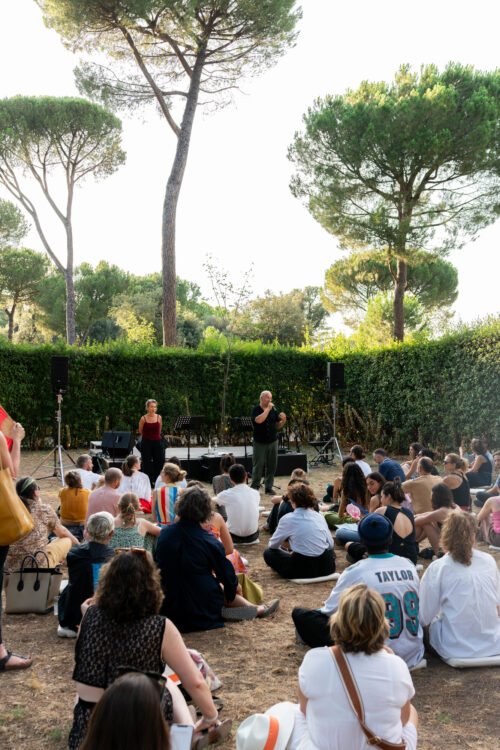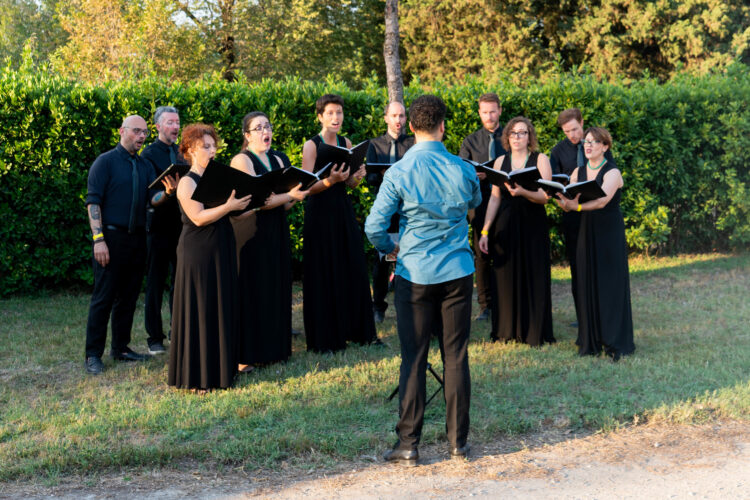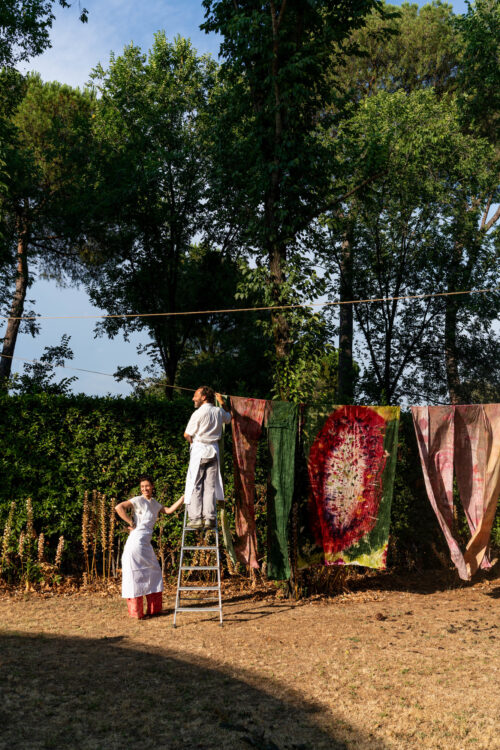
5 pm: La Nuit des Cabanes begins under a blazing sun.
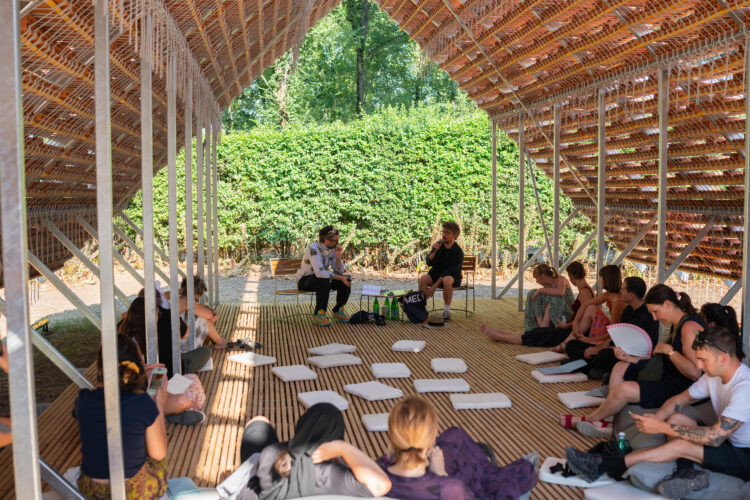
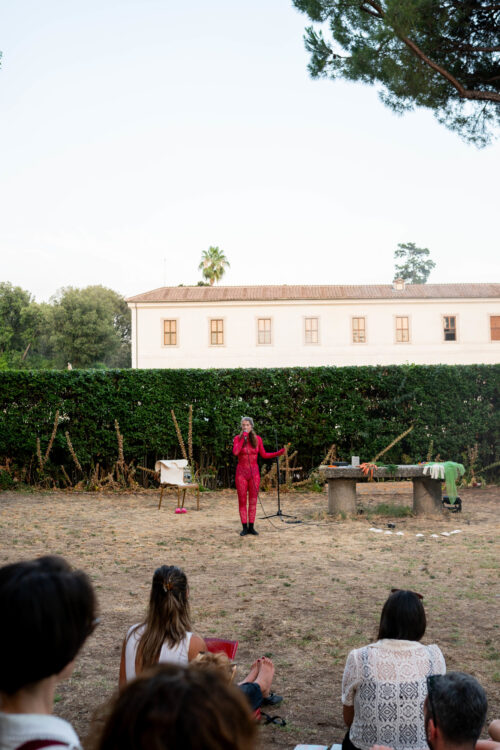
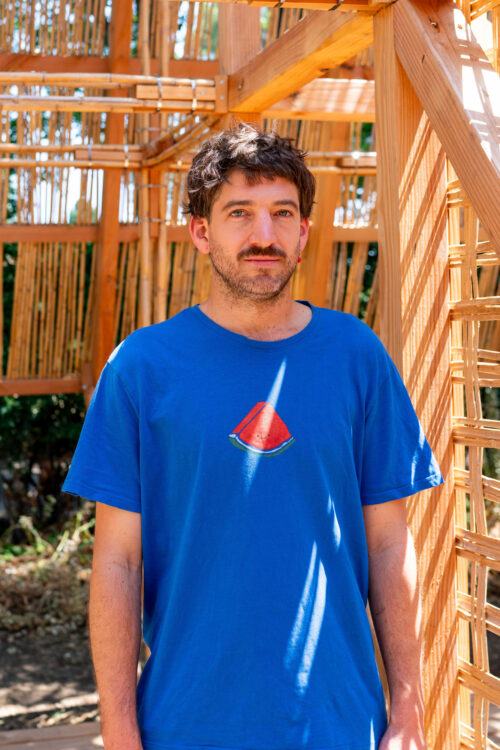
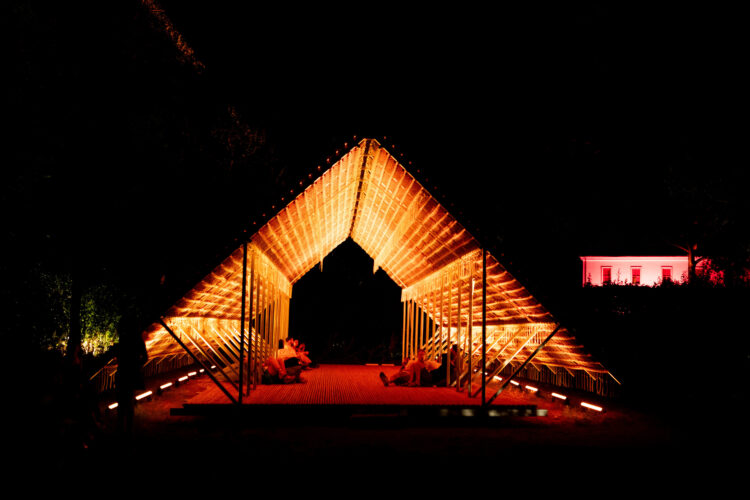
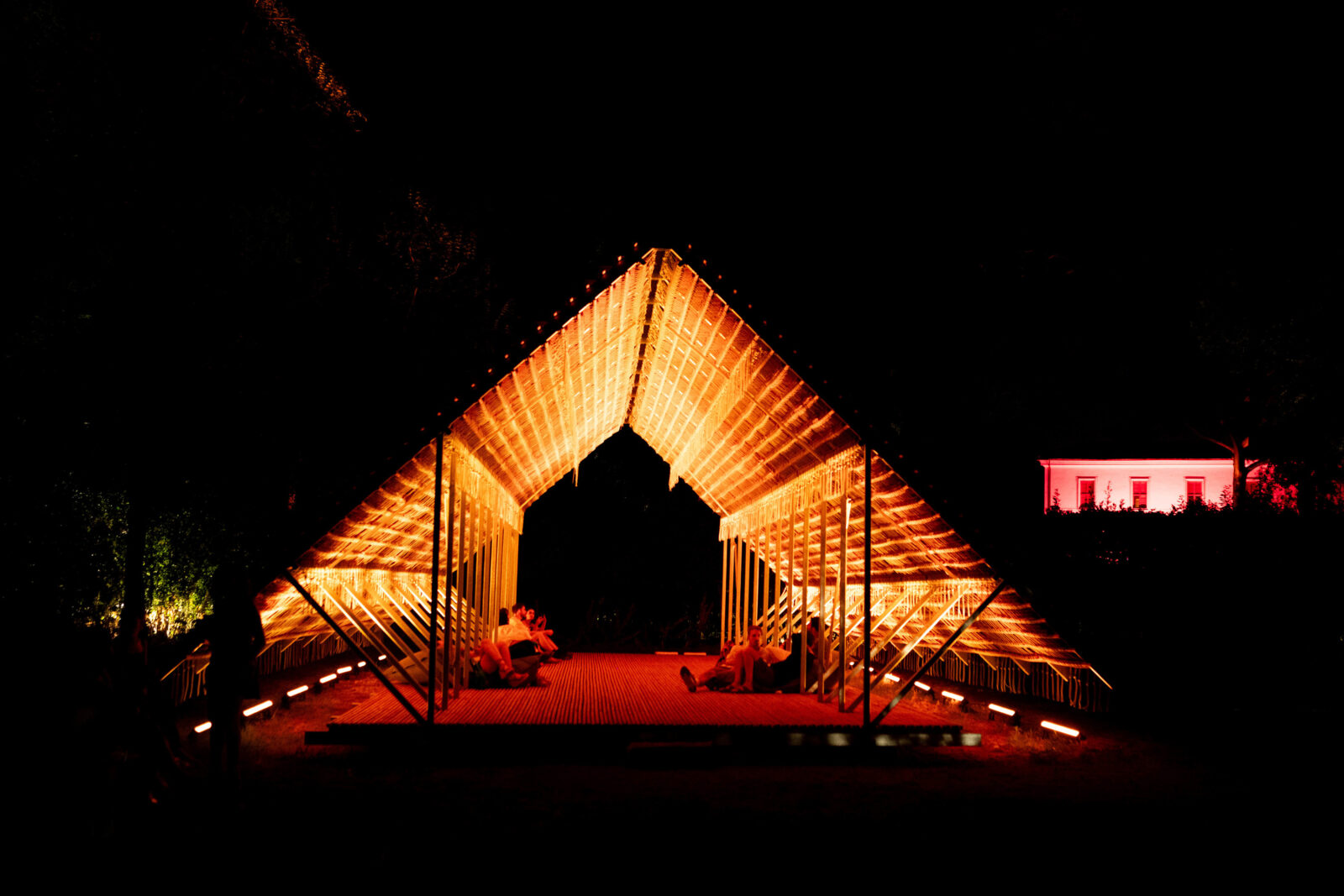
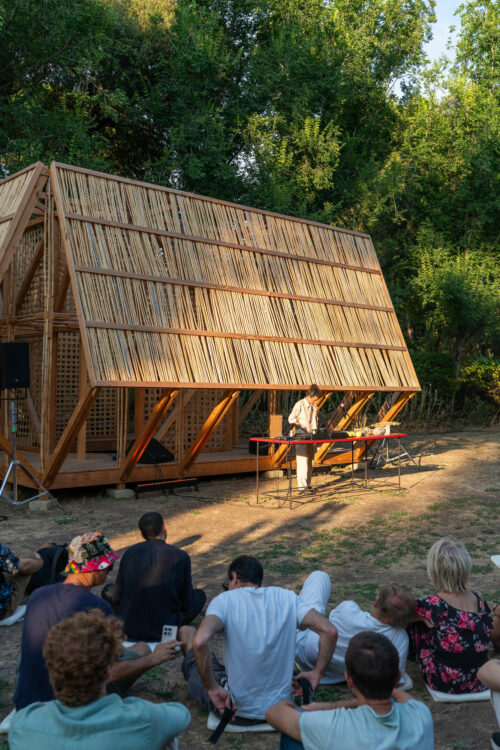
The thermometer reads 36 in the gardens of Villa Medici. A few degrees cooler, fortunately, in the shade of Cabane L7 by MBL Architectes, one of five architectural creations presented as part of this year’s Festival des Cabanes. Although its co-creator, Sébastien Martinez-Barat, still hesitates to call it a cabin – a pavilion, perhaps; a refuge or temple, surely. “We started this pavilion when Pope Francis died and finished it the day the new one was elected. Like a symbolic, almost sacred cycle.” The architectural encounter, which takes the form of a conversation between the architect and philosopher Emanuele Coccia, is the first event we attended as part of Nuit des Cabanes – Inhabiting Tomorrow. The first day’s dense program, marked by the highly inspiring roundtables of the event co-created with BNP Paribas (read our report on Inhabiting Tomorrow), unfolds at full speed and makes us almost miss the Planetaria theatrical performance. The event has only just begun, and it’s not even dark yet.
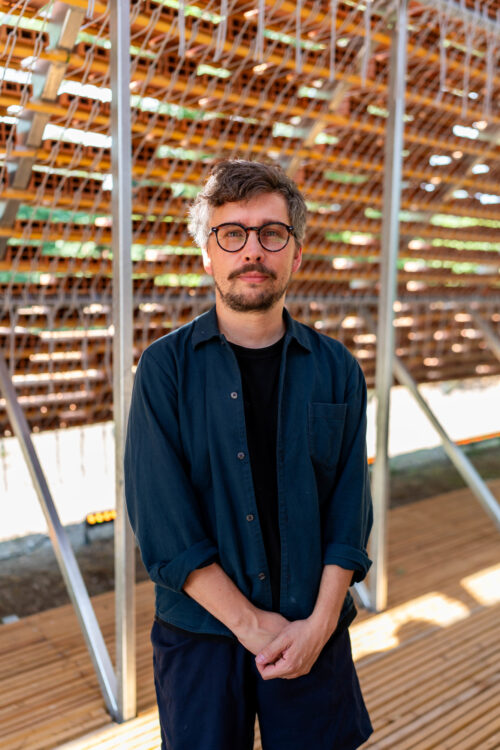
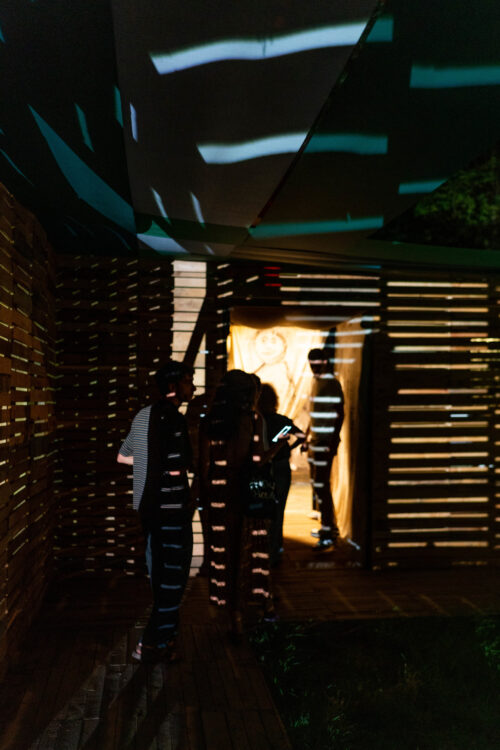
In the shelter of Cabane L7, built in the style of a meditative, unadorned “inhabited roof,” conversation begins. Lulled by the continuous chirping of cicadas, we listen intently, so thought-provoking is the dialogue. The festival invites architects to rethink their practices in light of the climate crisis, by answering the following questions: How can we propose non-invasive architectural forms? What are tomorrow’s sustainable housing solutions? Sébastien Martinez-Barat questions materials, their impact and their evolution, and this pavilion, which he imagines above all as a reading space, becomes more than just a simple shelter: it becomes a discreet manifesto for responsive, adaptable architecture. “From our point of view, wood didn’t really have a place in ephemeral architecture. What interested us was the idea of reversibility and fragility. Roman brick was originally designed to be assembled, disassembled and reassembled endlessly,” continues the young architect. He adds: “There’s something magnificent about brick. But nowadays, it’s set in concrete, and we’ve forgotten that it can be reversed.” In front of us, the bricks of the pavilion are not sealed, but rather tied with care and precision, “like you would tie a bow on a gift box,” he says. This knotting gesture becomes a way of honoring the material, securing it without enclosing it. As you look up, the 4,600 bricks suspended by 1,200 knots suddenly take on another dimension. More than an assembly, a philosophy: that nothing here should be lost.