Salone 2025: 24 hours in the heart of Milan, surrounded by design, installations, and discoveries
Milan, April 2025. While the Salone is in full swing in Rho, the suburb that hosts the gigantic FieraMilano exhibition center, the city is also buzzing with a different vibe. A more intimate, liberated, sometimes even experimental design is on display at every turn. So between visits to the Salone, we took the time to explore the other Milan: the Milan of secret showrooms, carefully staged displays, apartments transformed into refuges, installations hidden in gardens, hangars, and palazzos. For 24 hours, we wandered the city with our eyes wide open and our ears perked up. Brera, Porta Venezia, Varedo, Tortona... We followed the sounds, the lights, the materials. And like every year, we were surprised, moved, a little tired too, but above all nourished. Here's what we took away from this escapade in the grand theater of the Fuorisalone.
USM
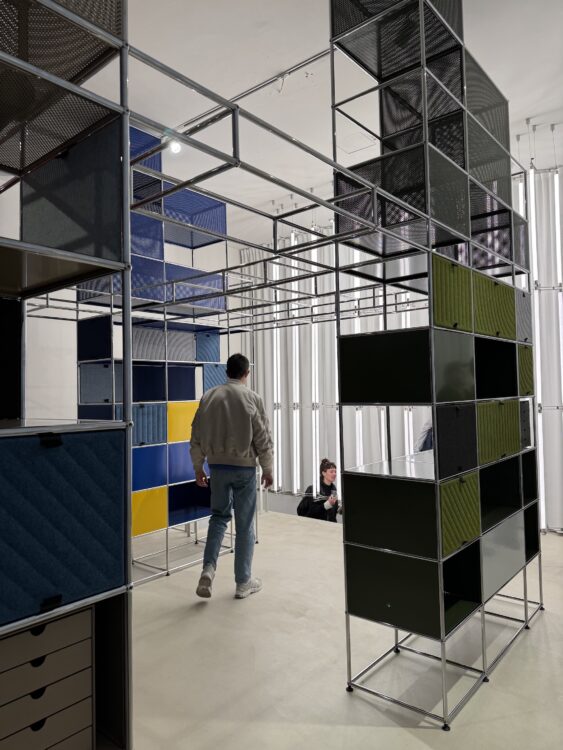
We begin our journey at Spotti, where the USM installation immediately immerses us in a soft, modular atmosphere. USM is celebrating the 60th anniversary of its famous Haller system, and to mark the occasion, the Swiss brand is unveiling a new textile add-on: the Soft Panel. This small element simply clips into place and transforms the look and feel of the furniture in the blink of an eye. The panels are soft to the touch, colorful, and above all modular—a real success both aesthetically and acoustically.
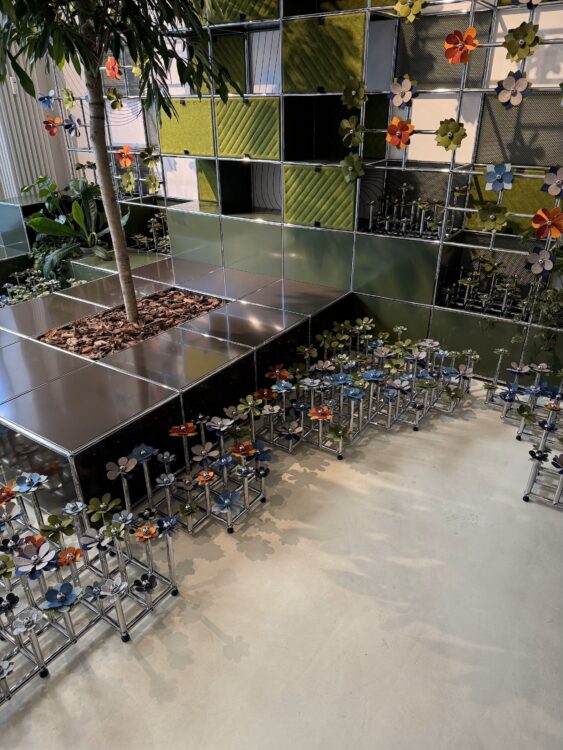
The installation, entitled Connected by Our Dreams, was designed in collaboration with JOBA and designer Marc Venot. Visitors enter a room where light plays with textures and furniture blends with floral arrangements, creating an almost dreamlike atmosphere. It is no longer just a showroom, but a space for sensations, where one can drift off into a daydream.
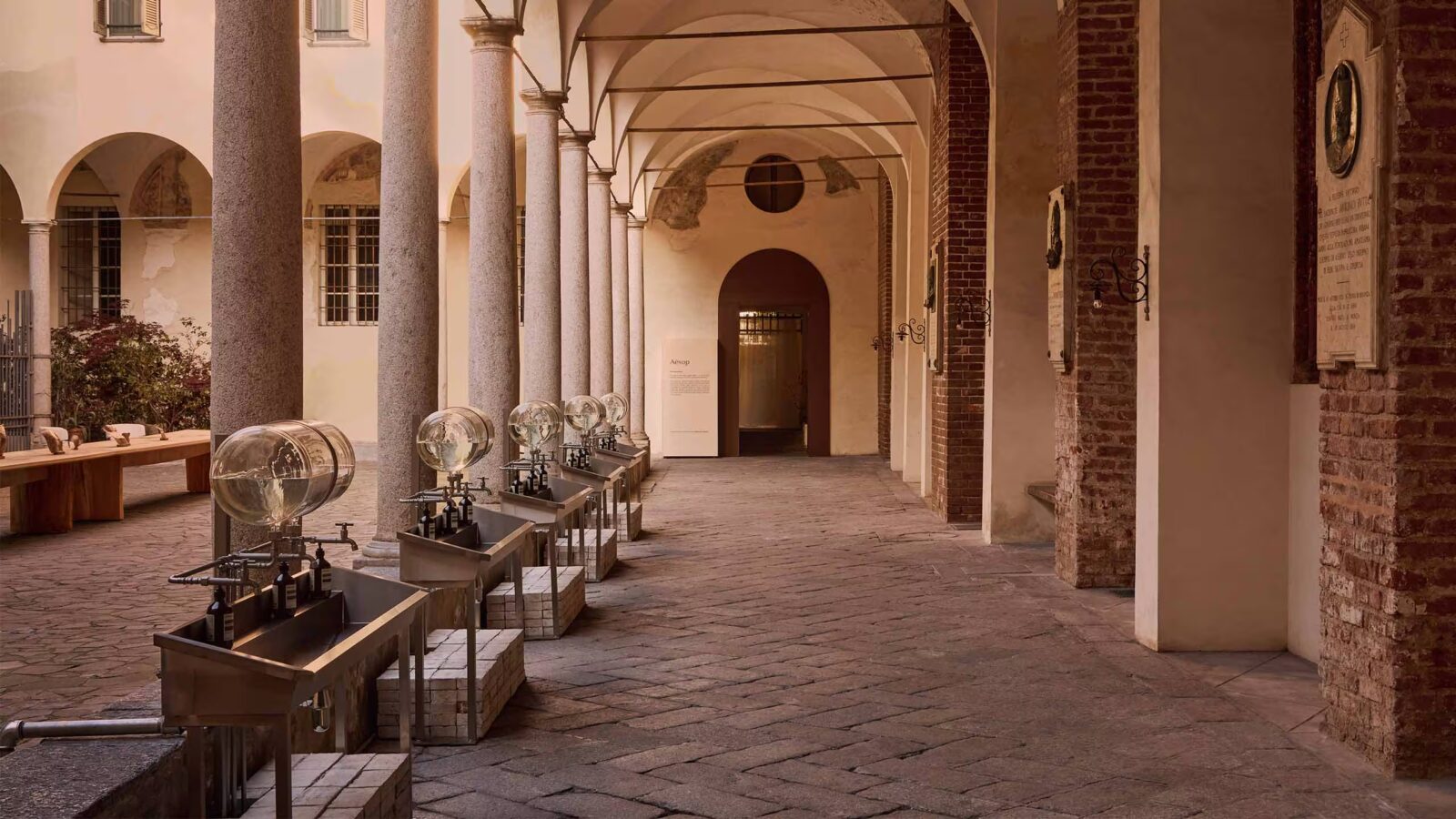
Aesop: Immersion in the cloister of the Chiesa del Carmine
From Spotti, we head across Milan to Brera, where the pace slows down a bit. The cobblestones echo underfoot, the facades are illuminated by the April sunlight, and in Piazza del Carmine, the church stands majestically.
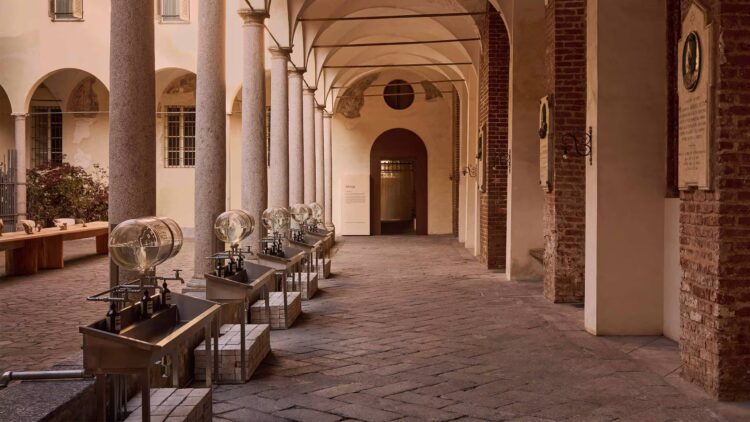
Aesop has taken over the arcades of the adjoining cloister for a cocktail party with an installation in the sacristy that is as sensory as it is elegant. The walls are covered with iridescent panels, subtly scented with Éleos. The eye is drawn to the reflections, while the scent wafts through the air, almost Imperceptibly. The space allows us to take our time, and we do. Combining ancient stones and contemporary minimalism, the venue invites visitors to experience a sense of rare, almost meditative calm. A true aromatic breath of fresh air in the heart of Brera.
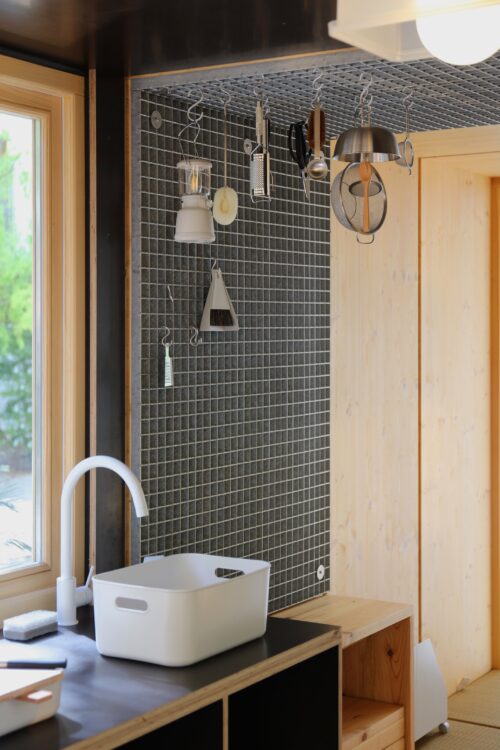
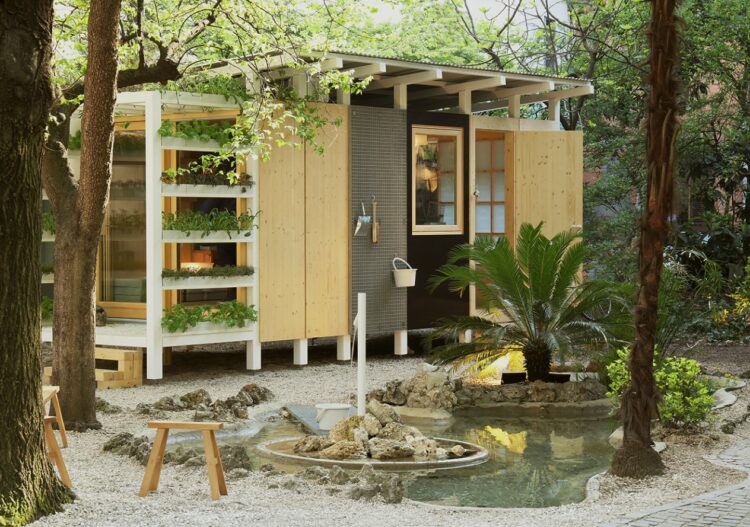
In the heart of the Brera district, MUJI presents its Manifesto House, a minimalist cabin designed with Studio 5.5. Based on micro-architecture inspired by the Japanese way of life, it is designed to allow visitors to slow down, breathe, and get back to the essentials. With no superfluous objects, everything here is designed to meet real needs with a minimal use of resources.
The collection of ready-made objects on display around the cabin catches the eye. All are made from existing MUJI products: a birdhouse made from a bookend and a drawer, for example, in a simple but meaningful statement. It is a joyfully minimalist proposition that questions our relationship with objects, consumption, and use. In other words, design that speaks softly but says volumes.
Grand Seiko x Tokujin Yoshioka – Time stands still
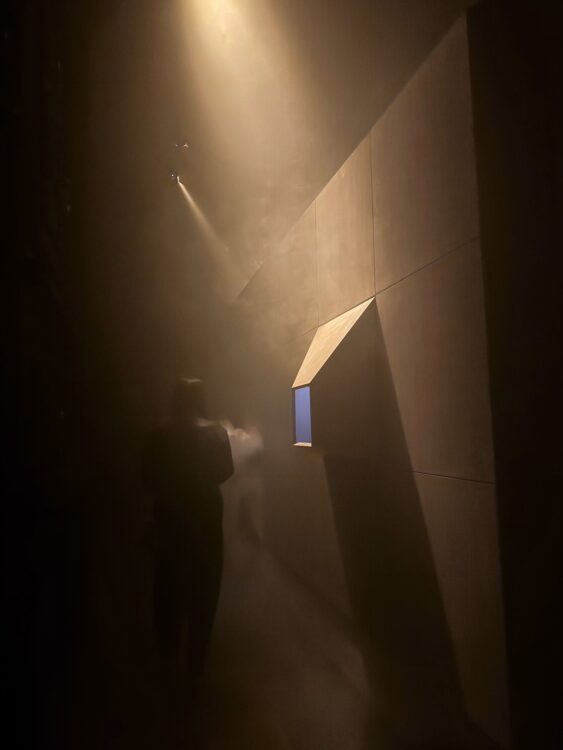
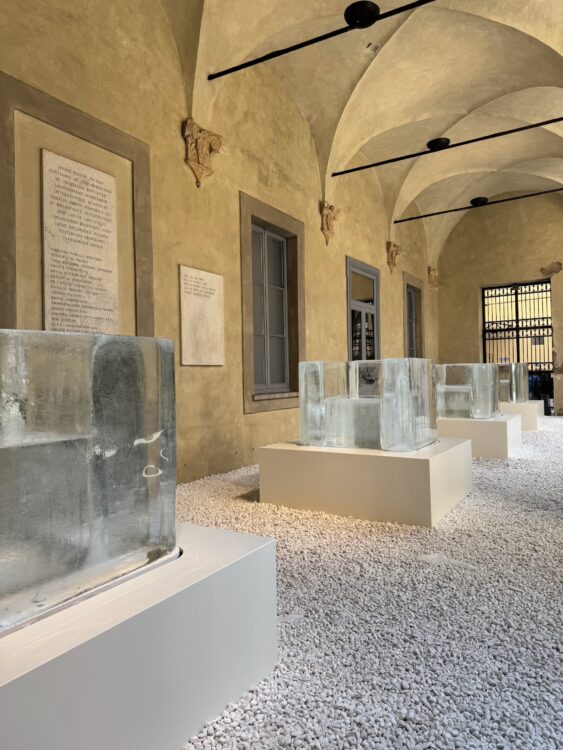
A few steps away, the atmosphere changes completely. With Frozen, Tokujin Yoshioka has created a hypnotic installation for Grand Seiko: a sculpture of light and crystalline ice in constant metamorphosis, representing the passage of time as water trickles down. The interplay of reflected light and variations in brightness evoke movement in an almost motionless way.
Seated in the cloister, the pristine, surreal Aqua Chairs convey a sense of frozen fluidity. The installation resonates with the Spring Drive watches, whose second hands glide smoothly in absolute silence. Here, design becomes poetic, almost metaphysical. One stops, gazes, and remains silent. A true contemplative interlude.
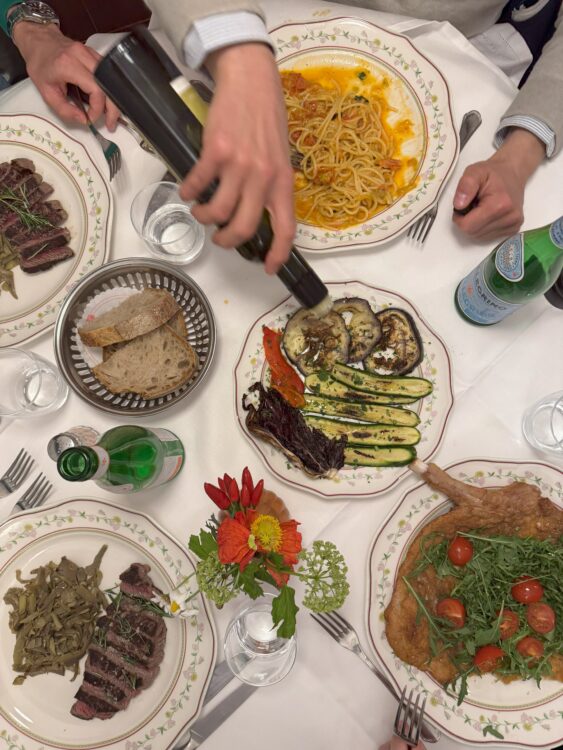
After visiting a few showrooms and exhibitions, time to refuel with a delicious lunch. Thankfully, Italian cuisine is always a safe bet. A simple, welcome break to discuss the latest trends in design. Don’t hesitate to ask us for our recommendations!
Tacchini’s inaugural Milan showroom
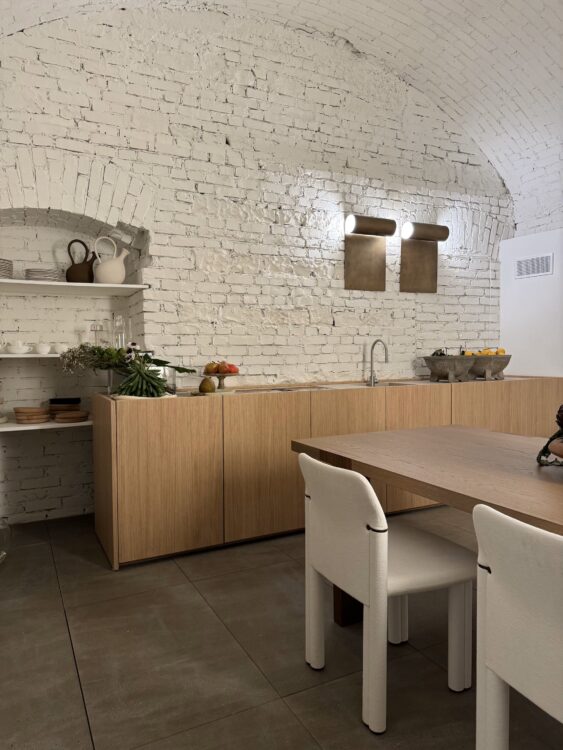
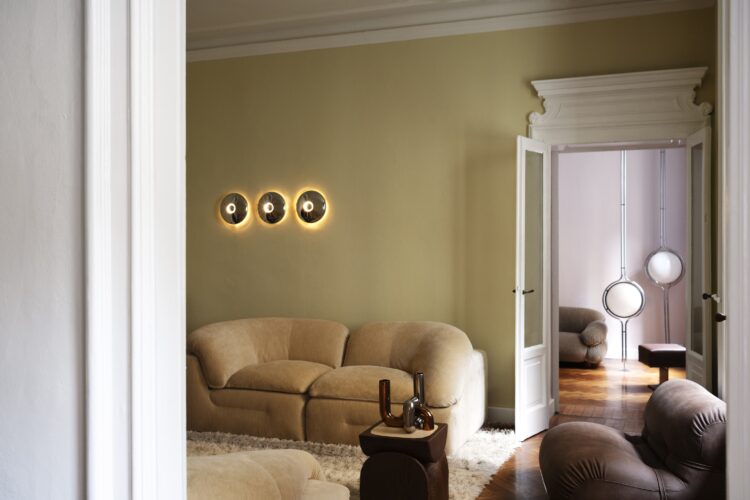
Just a stone’s throw from the hustle and bustle of Brera, Tacchini unveils its very first showroom in an early 20th-century apartment that has retained its original charm. A far cry from traditional displays, visitors here step into a well-preserved interior redolent with weathered parquet floors, brick vaults and natural light, with each room illustrating a different approach to living.
The staging, designed by Charlotte de La Grandière, emphasizes warmth and harmony. Muted colors, soft materials, and carefully selected pieces: everything seems designed to interact with the space without ever overwhelming it. One feels comfortable, almost at home. This showroom is more of a refuge than a sales space, a warm, human-scale place where one can interact closely with the objects on display.
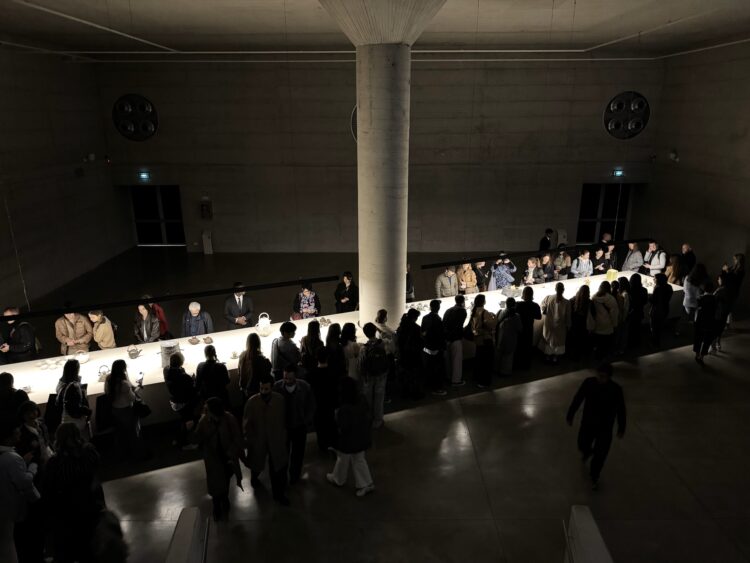
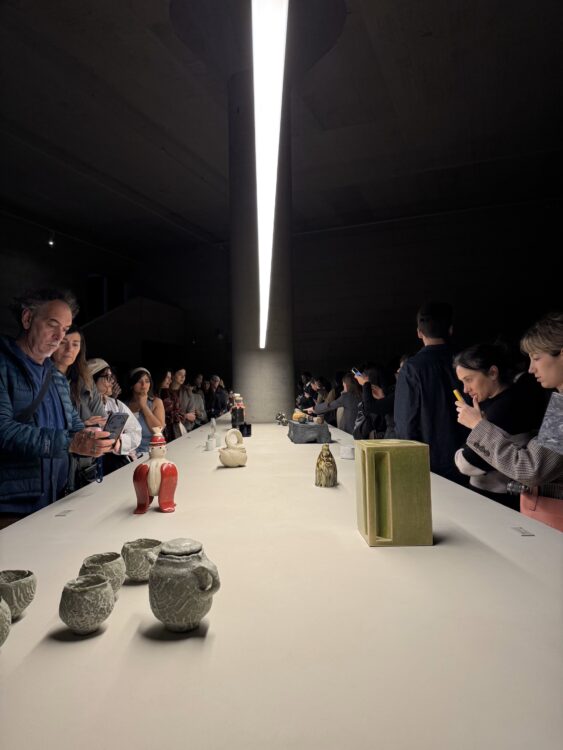
Next stop: Palazzo Citterio, an 18th-century gem nestled in the heart of Milan. This is where Loewe has chosen to stage its exhibition, and this year, the Spanish fashion house is going for something unexpected: teapots. But not just any teapots. Twenty-five artists, designers, and architects have been invited to revisit this everyday object, exploring all its formal and material possibilities.
The result is a collection that is halfway between sculptural art and functional design. Porcelain, stoneware, rough or shiny textures, glazed or matte: each piece questions our relationship with function, beauty, and ritual. Surrounding these teapots, a series of objects—tea caddies, charms, candles—extends the experience. One of which, housed in fine ceramic, diffuses a subtle scent of Earl Grey and bergamot. Slowing down, observing, savoring: this is also what the Salone is all about—taking the time to be surprised.
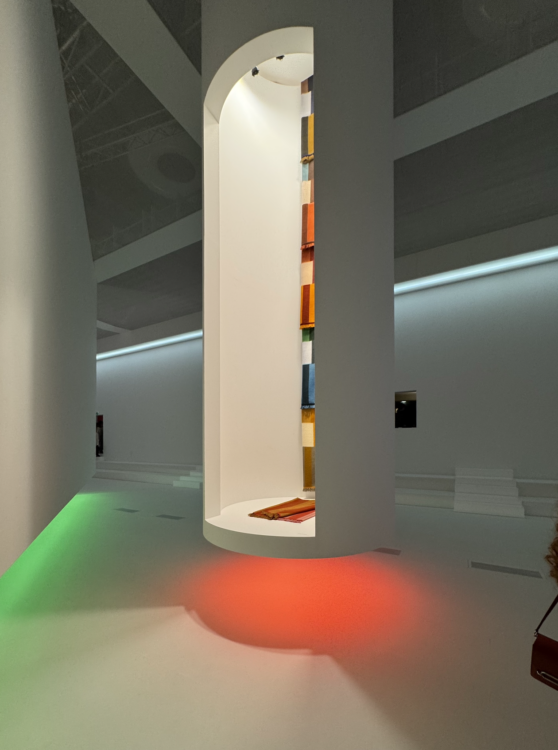
At La Pelota, a legendary venue for Milanese design, Hermès has taken the opposite approach to spectacle. There is no grandiose staging here, just a captivating, almost weightless simplicity. In a virtually empty space bathed in colored halos, volumes float weightlessly, each object seeming isolated in its own bubble, enveloped in silence and light.
Glass is at the heart of the installation: crafted with precision and finesse, it plays with light to reveal what is usually invisible. At the center of the room, Tomás Alonso’s Pivot table catches the eye with its clean lines and subtle yet structuring colors. Surrounding it, Nigel Peake’s delicately watercolored porcelain pieces and sumptuous textiles unfold a delicate narrative, full of rare gestures and precious craftsmanship. Everything is suspended, nothing is fixed. The scenography is precise, refined, yet deeply alive.
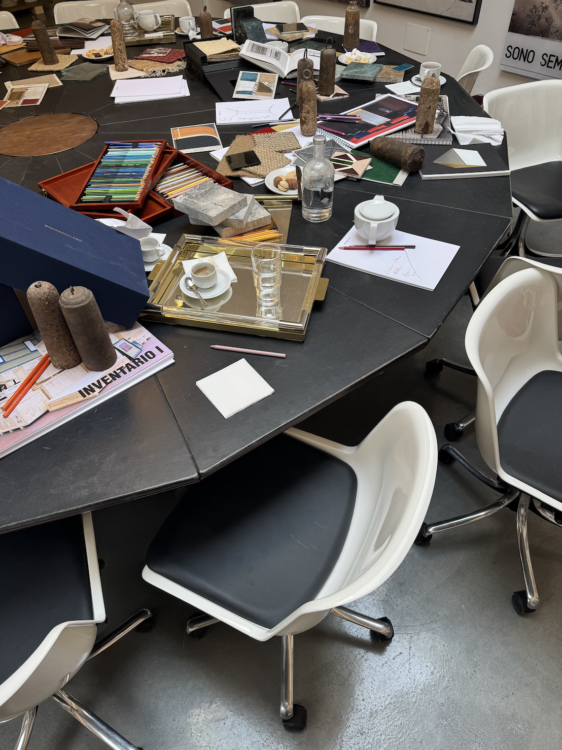
Dimore is the iconic duo formed by Britt Moran and Emiliano Salci. Their quirky Milanese studio cultivates an aesthetic that blends Italian cinema, buried memories, and bold contrasts. This year, they are taking over several venues across the city. We stopped by the Fondazione Sozzani to discover Work It, an exhibition designed as a nod to their own creative process.
The space, set up to look like a busy office, feels like you’ve walked in on the studio mid-work. A big table covered with open notebooks, fabric samples, and coffee cups looks like someone just left a work session. On the walls, an accumulation of photographs, sketches, and textures blend together to form a gigantic mood board, a true reflection of the studio’s universe. The past emerges, the present is invented. It’s a way for Dimore to blur the lines between fiction and reality, while remaining true to their unique, elegant, romantic, and always slightly mysterious universe.
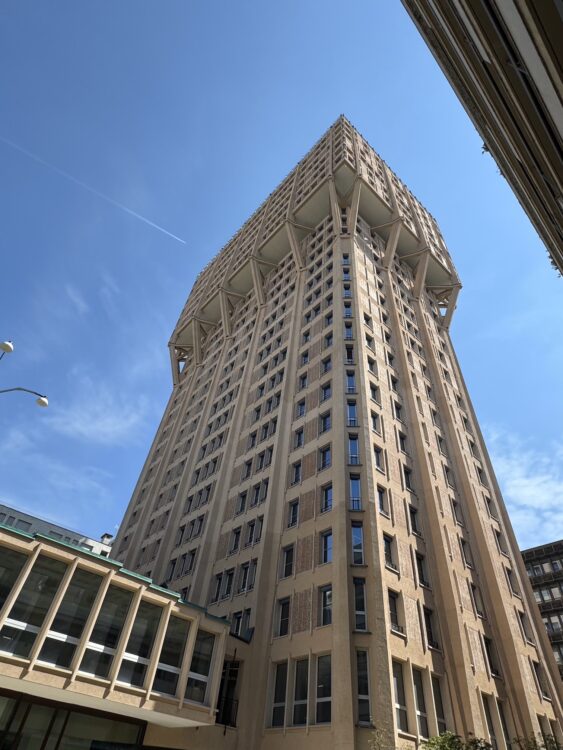
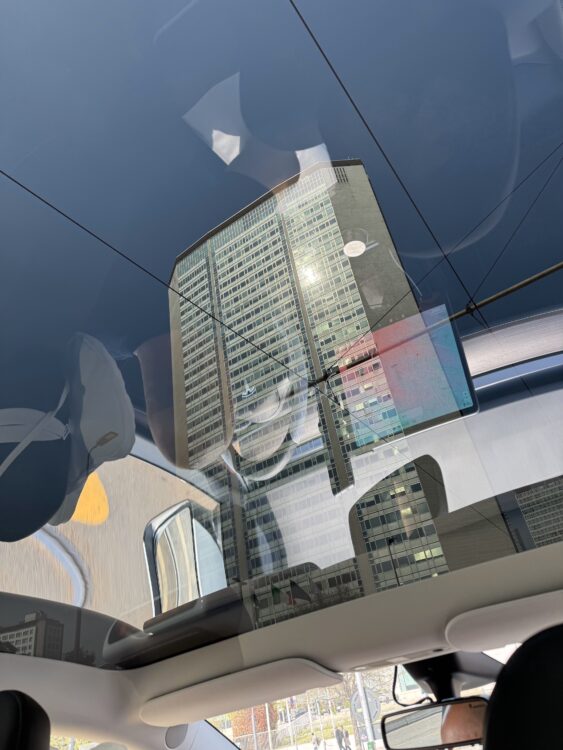
After Dimore Studio, it’s time to take a breather. We once again head across Milan and stop in front of Torre Velasca, a tower that seems straight out of another era, with its unique brutalist style inspired by the Sforza Citadel.
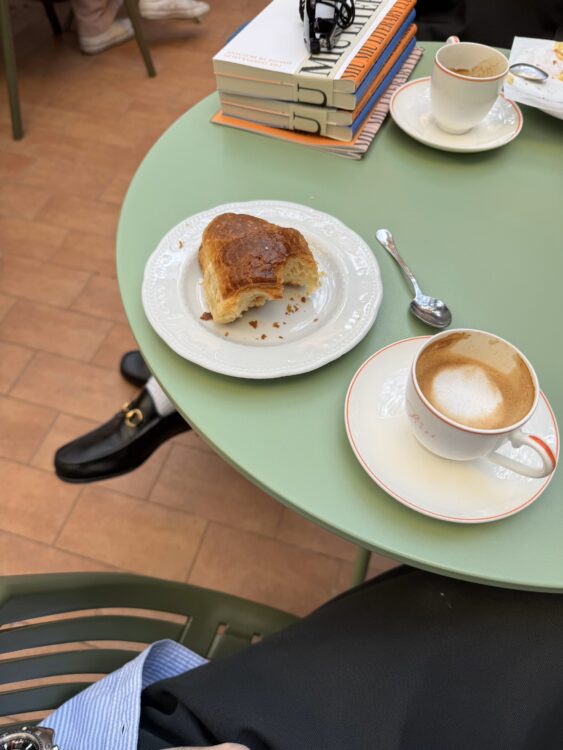
Then we head to the sidewalk café with a coffee and cornetto in hand to enjoy a quick break before continuing our exploration of Milan’s showrooms.
Saint Laurent x Charlotte Perriand – archival reissues
We leave Brera and head to the Tortona District. There, in the Padiglione Visconti, Saint Laurent unveils a rare collaboration with the great Charlotte Perriand. Four pieces of furniture, designed between 1943 and 1967, are being reissued for the first time in their original size. The twist? These designs have only existed as models or sketches. Now, they are finally taking shape.
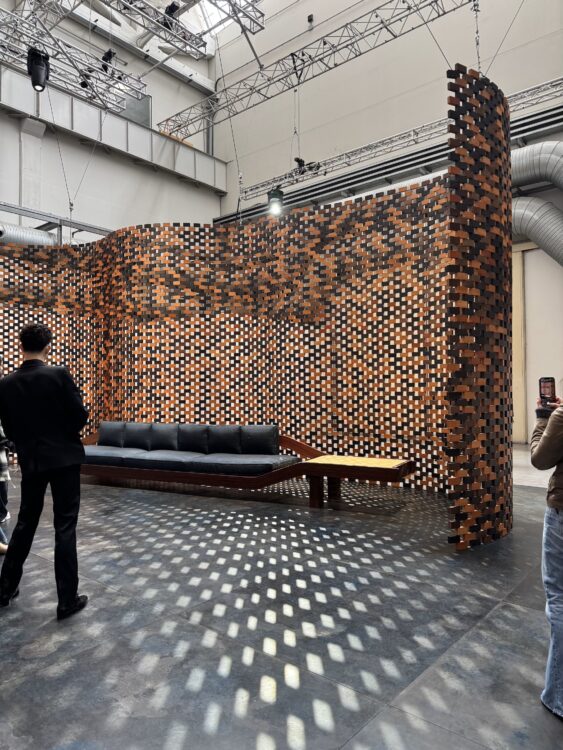
Diplomatic sofa, curved wooden armchair, modular bookcase: each piece embodies the designer’s radical, minimalist aesthetic. The staging, designed by Anthony Vaccarello, is understated, precise, almost monastic. We particularly love the large suspended partitions made of tropical wood. Visitors wander among the objects as if leafing through a precious archive, at the crossroads of fashion and design.
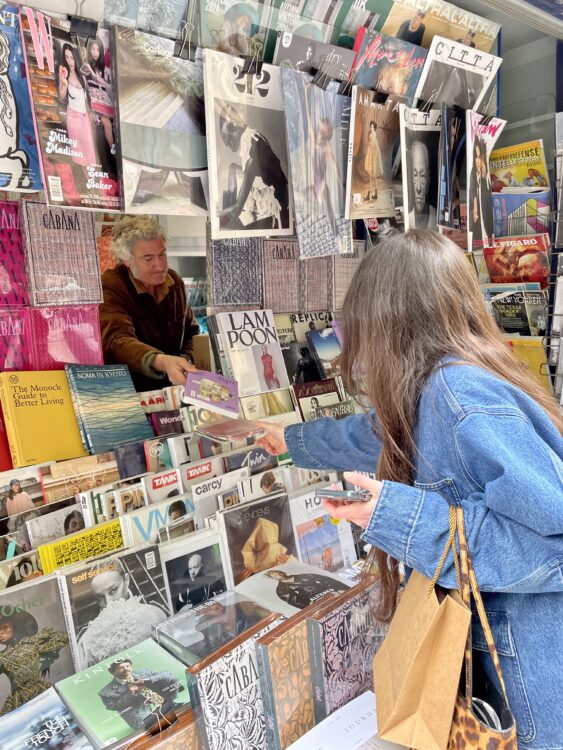
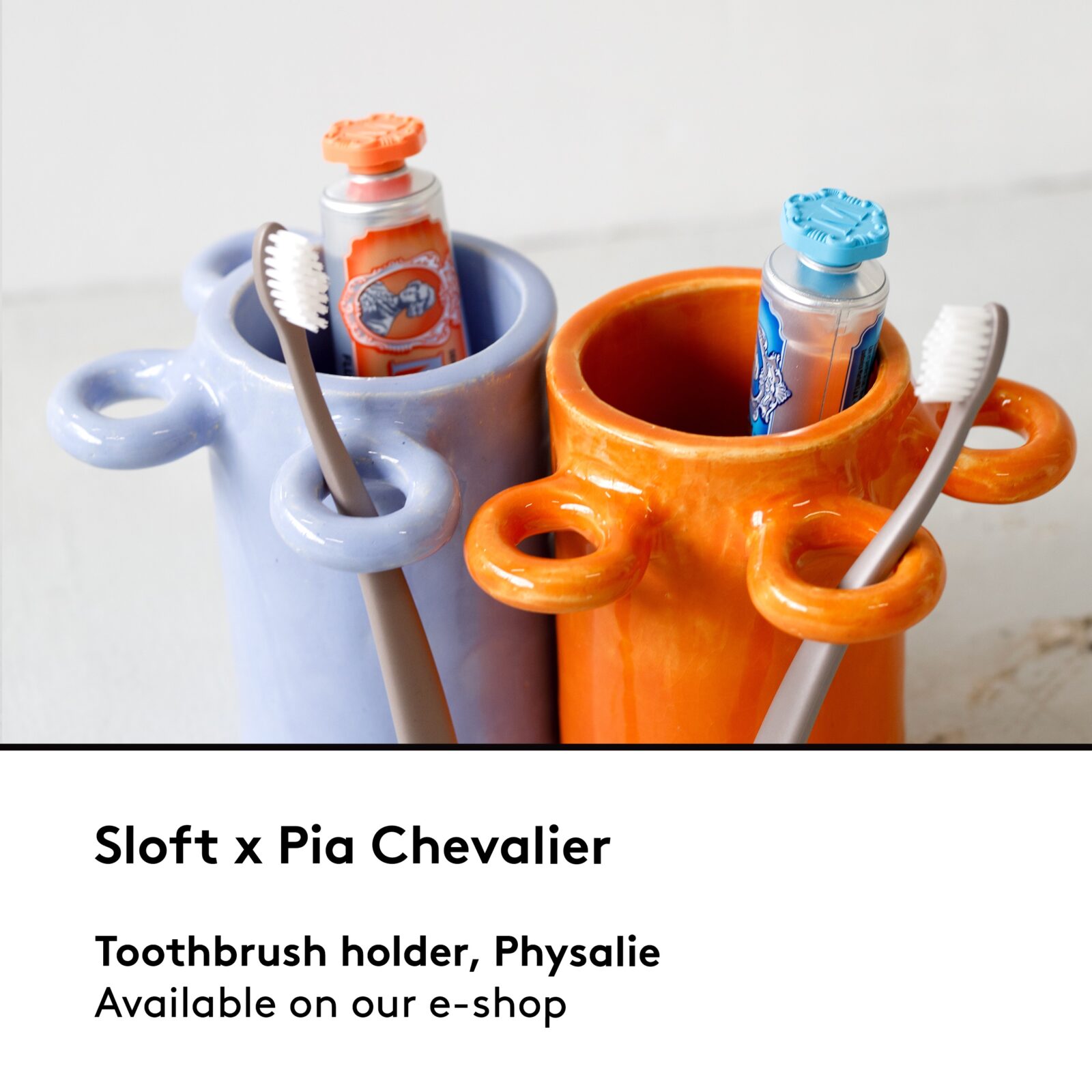
In the city, newsstands are everywhere. And surprise! An elegant Milanese woman buys her “Sloft.”“Buongiorno, ce l’hai l’ultimo Sloft perfavore?”
Capsule Plaza – 70Materia: a feast for the eyes
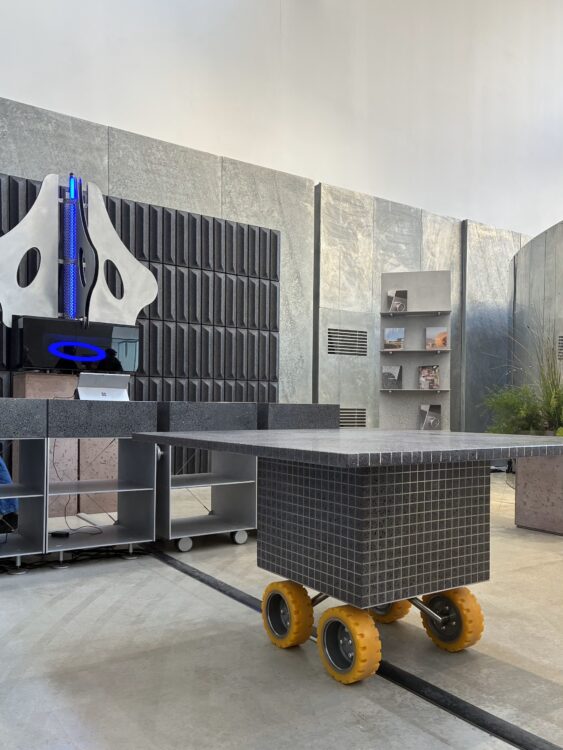
At Spazio Maiocchi, Capsule Plaza is one of the off-site’s most vibrant hubs. Here you’ll find 70Materia, a young studio that transforms kitchens into a veritable playground for formal exploration. Monolithic blocks, magnetic modules, mineral finishes… Here, everything is designed to shake up the rules of home design.
A special mention goes to Orbita, their collaborative project with three other design studios. Together, they present a series of playful, inventive sculptural pieces that show how material can truly express itself when given room to breathe.
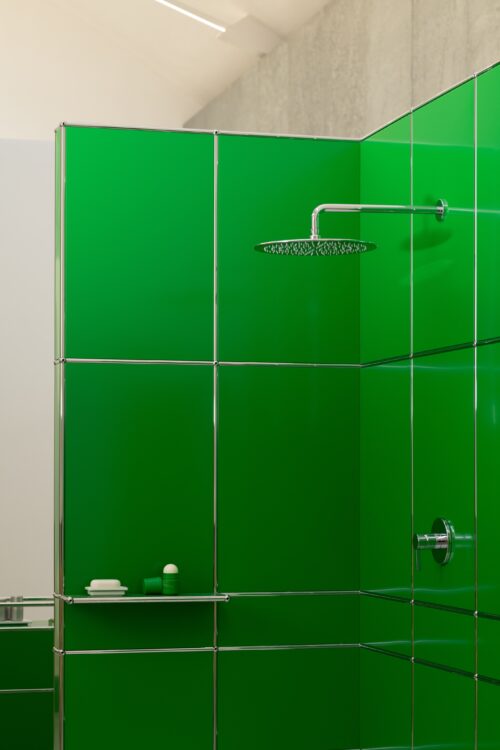
Also at Capsule Plaza, we found a space that resembles a tranquil laboratory. Here, Humanrace, the wellness brand founded by Pharrell Williams, has collaborated with USM Modular Furniture to reimagine the bathroom. Breaking with convention, the installation offers a new way of thinking about this space dedicated to our daily care routine.
In an immersive setting, USM’s modular structures create a fluid environment with open lines and moss green hues. Visitors can move freely between furniture and all-gender skincare products. Everything here invites you to reconnect with your body, your rhythm, and your space. It’s calm, beautiful, and just right.
We leave Milan in the late afternoon, our eyes still filled with shapes and colors. In the rearview mirror, the city gradually fades away, replaced by wild, almost forgotten landscapes. We head for Varedo.
‘Alcova’
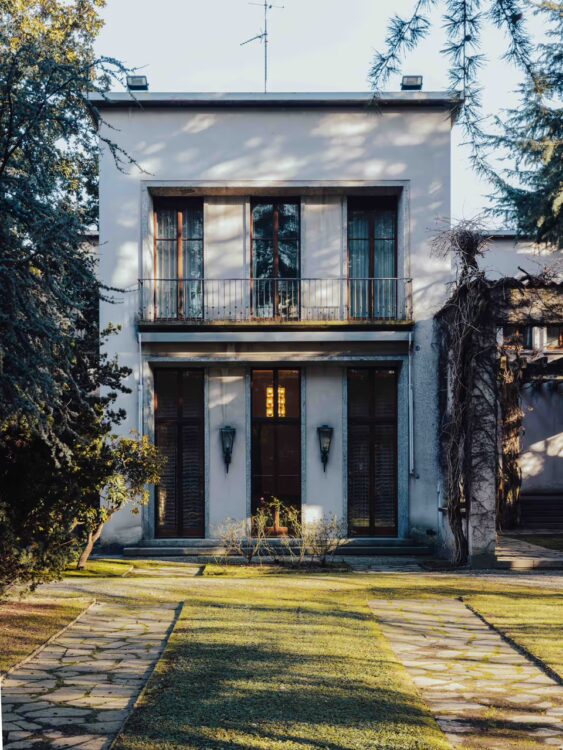
Here, Alcova has turned the area into its playground. Between historic villas and abandoned buildings, decadence and poetry coexist. This year, the event will take place at four sites: the Bagatti Valsecchi and Borsani villas, as well as two new additions, the former SNIA factory and the abandoned Pasino greenhouses. A timeless setting for one-of-a-kind installations.
It’s easy to lose yourself in these abandoned spaces, where nature is gradually reclaiming its rights. With light flooding through glass roofs, weathered concrete, and wild vegetation, design is showcased here in a different way. The materials are raw, the technical experiments daring. We come across unclassifiable pieces, unfinished installations, spontaneous creations. This is no longer a showroom, it is a territory. A place of exploration. A contemplative end to the journey, reminding us that design can also be a promise for the future.
Nous utilisons des cookies pour vous garantir la meilleure expérience sur notre site web. Si vous continuez à utiliser ce site, nous supposerons que vous en êtes satisfait.