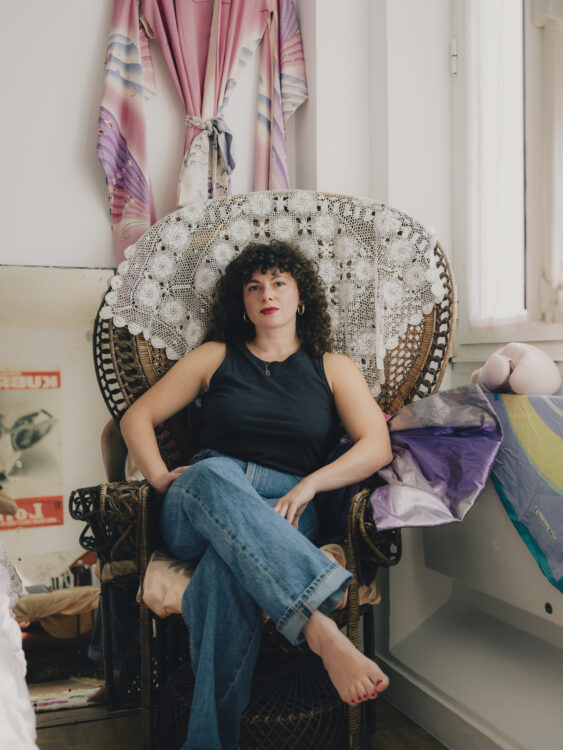
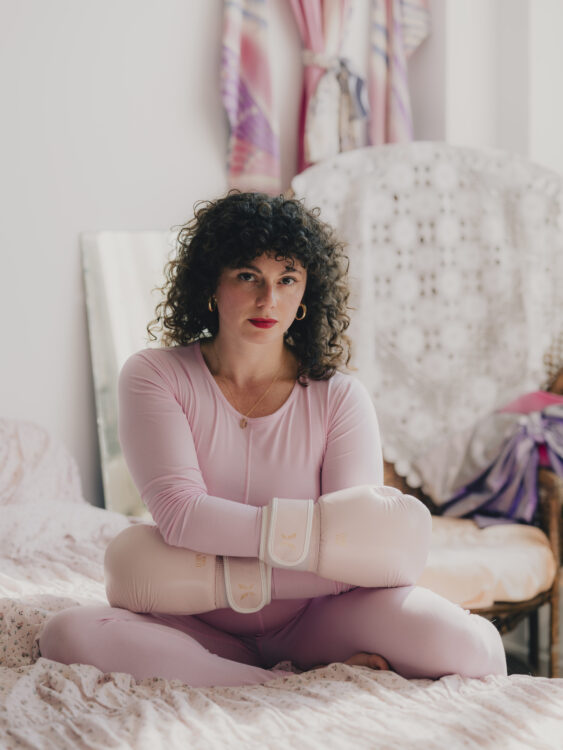
Romy Alizée, artist, photographer.
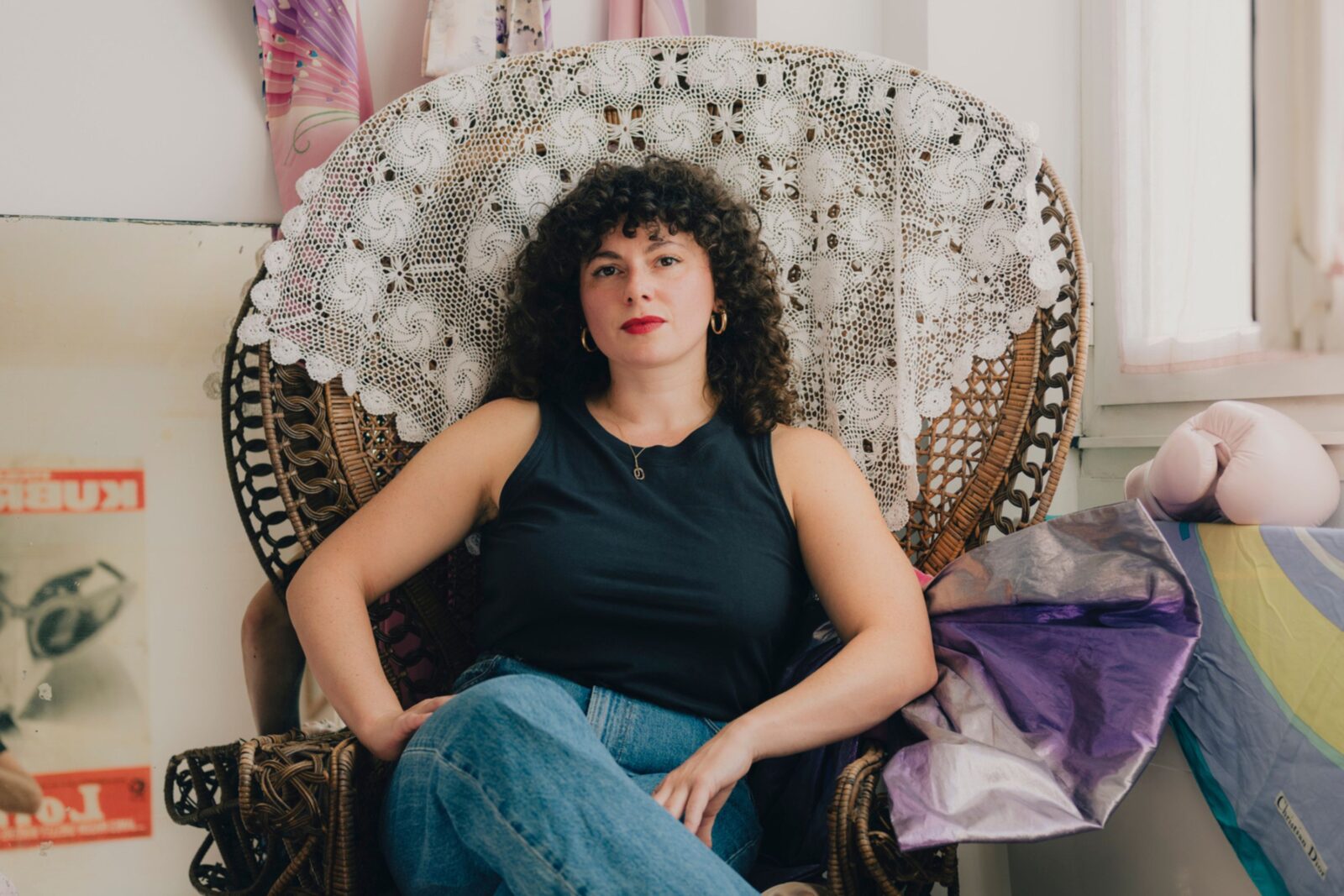
You’re quite obviously a multi-faceted artist. How would you describe yourself?
I tend to say that I’m a multidisciplinary artist, and I make it a point to assert that I’m self-taught. I think that’s important. There are quite a few people who haven’t studied art, or wouldn’t feel comfortable starting a practice without a school’s seal of approval. I don’t have many self-taught people around me.
Is photography foremost in your practice?
Yes, I was a photographer’s model from the ages of 20 to 25. At the time, I was in a private drama school, and posed as part of my studies to become an actress. I started posing nude, mainly for the sake of creating images. Seeing photographers at work made me want to do the same, but without any real ambition or plan. Of all the things I was trying at the time, photography worked out a fair bit better. So that’s where I stayed, even though I never had a childhood dream of being a photographer. On the other hand, I had a true addiction to images. I used to cut out lots of photos, buy fashion and film magazines, curate my favorites and make collage murals in my bedroom. I had a real relationship with photography.
Were your first photos of people taken on your bed?
They were. A few years ago, I was living in a small – if rather insalubrious – 18 square meter apartment overlooking the Sacré-Coeur. It was like a cave that I had for several years. It was there that I started a project called “The Room Got Heavy.” I had a lot of people come to my place, and I photographed them! The wall was covered with photos that I printed on 10×15 glossy paper alongside other images and posters. I made crappy prints, which I kept. All sorts of people posed naked, always within the same décor. It was a very busy place. I don’t know how many people went through there, but the project was really tied to my interior. It was one of my first “official” projects.
Many of your photos are minimalistic, and shot in high-contrast black and white against a white background. Can you tell us about your aesthetic?
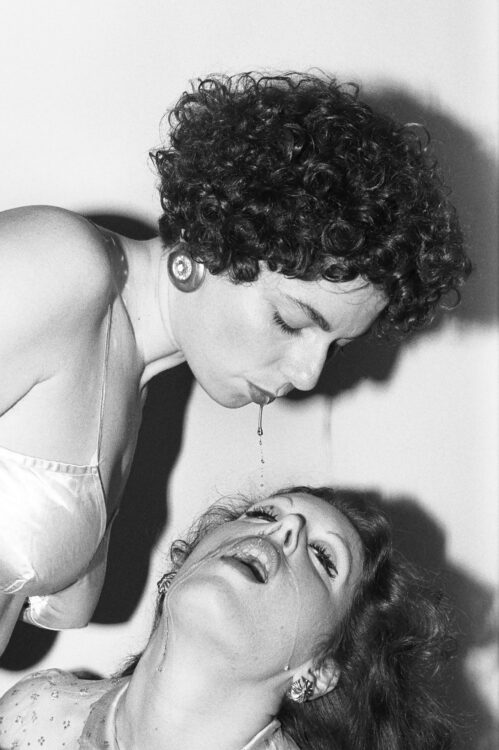
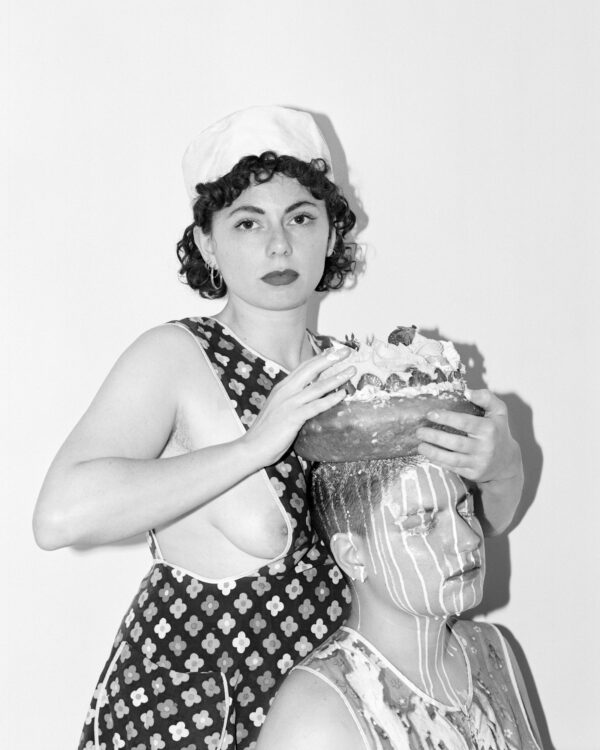
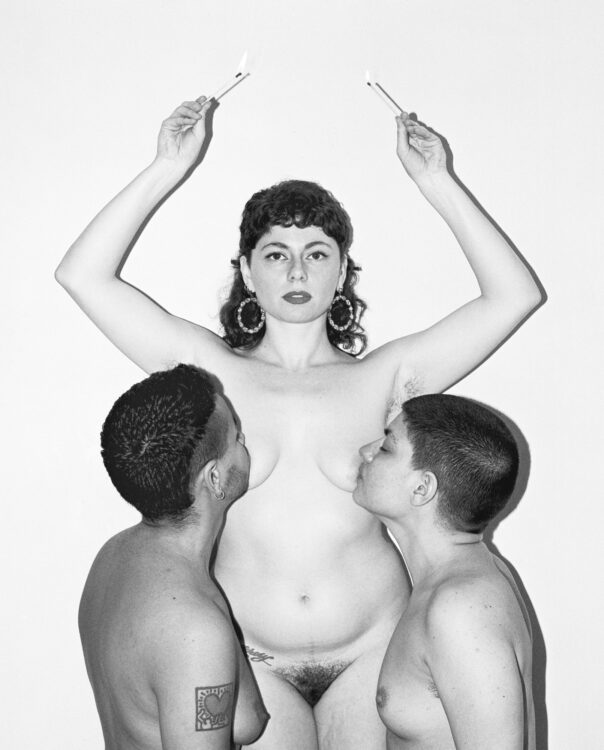
My aesthetic emerged instinctively, in part because I was following the work of a lot of photographers, like Nobuyoshi Araki [a Japanese photographer known for his erotic imagery, editor’s note]. Obviously, there are references that are always in the air, but I didn’t want to be part of any particular history of images. All I wanted was to achieve a very head-on look, with very little nuance. Hence my explicit stagings, with a very raw edge. I also use flashes that are always aimed at the scene being photographed. I like the high-contrast aspect of my photos, the strong shadows: it’s such a blunt vision of sexuality that viewers can’t look for anything seductive in it.
So my photographs may be pornographic, but they have no erotic or sexually titillating function. I ask my subject to look straight at the camera, so that the viewer is involved. It begs the question: who’s looking at whom? Why do we feel so voyeuristic when looking at nude images? Why do we sometimes feel uncomfortable when it’s a woman, like me, creating her own explicit images, not least a feminist and lesbian? So I don’t play the male gaze game. The fact that I look at the camera when I’m posing also serves to convey a certain pride. I could have taken nude photos with shadows and concealed parts, but that’s not at all what I wanted to advocate for with this project. Not that I reject other aesthetics, other ways of showing the body and sexuality, but for me, it was simply visceral to expose it to such an extent.
Your taste for eroticism is quite evident throughout your apartment.
My life path has meant that sexuality and desirability have always been an important issue for me. Being able to take responsibility and be sexually autonomous, not letting society impede my desire with its morals, its judgments, but also the way others look at me, was an issue for me very early on. In my youth, I wasn’t in an environment where it was tolerated. Sexuality was a space of fulfillment for me. Even though I’ve been stigmatized for the work I do, I’ve always made it a rule to never write off sexuality. I know there are people who want nothing to do with sex because it’s supposedly a breeding ground for violence, but I don’t think anyone will take my desire away from me, even as a survivor of sexual assault. It’s a place of fulfillment that’s all mine, and that doesn’t preclude complexity.
You’ve produced a rather daring photo series entitled “Variations autour de la Parisienne.” What inspired you?
The photos in this series were taken on stage. They’re not about seduction, they’re about humor, and questioning our relationship to sexuality, and to seeing sex and bodies. For me, creating something light and joyful out of it is inherently political.
It’s true that humor is very present in your recent films. Why make edgy pornography rather than “normal” pornography?
I’ve acted in pornos with (female) directors who had more of a straightforward bend. I think that’s great. But my mode of expression is humor, in everything I do. My writing always has an ironic element, verging on the absurd. I too like to be faced with works that first make me raise an eyebrow, only to burst out laughing. I like to be outraged too. I can indulge in a bit of juvenile humor. At the moment, I’m watching the American version of The Office again, and I think it’s hilarious! It’s the details that make me laugh, like Monty Python. It’s a means of creation like any other. Some people need to use humor. Because when we talk about sex, pornography, feminism, and sometimes gender, these themes can seem very serious at first. But for me, it wouldn’t be natural to talk about them by pounding my fist. I need to make people laugh to get my point across.
You’ve taken a lot of photos in your apartment, where we are right now. How did you go about transforming your living space into a photo studio?
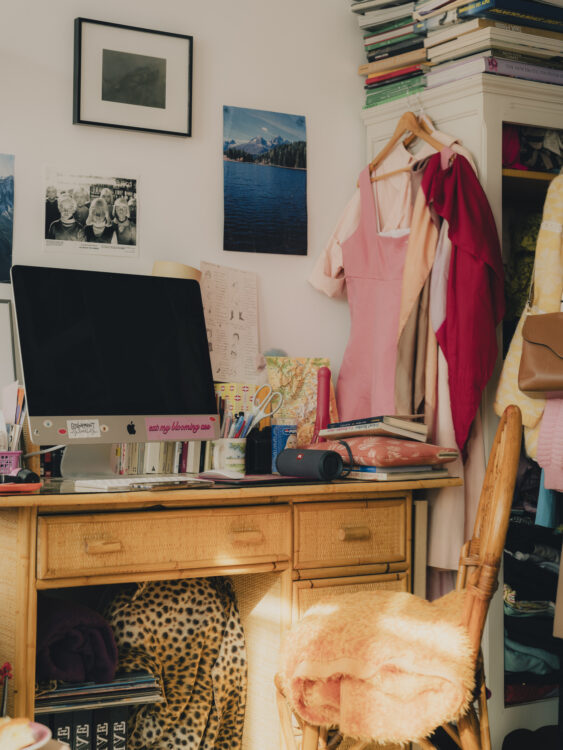
Six years ago, I did a lot of staged photos here, and I remember moving things around because I needed full-height shots. This apartment often looked like a mess, and to take photos, we’d stand in a corner, after having moved the (rather heavy) mirror. I’ve gotten over this very DIY, jerry-rigged way of doing things. I’ve transformed my apartment, and got rid of lots of things. And I took steps to prevent myself from working from home too much. For a long time, I left my living room very bare, so that I could easily do portrait sessions. It was only very recently that I surrendered to putting up picture frames.
How do you feel about having turned your home into a workplace?
Things are better now because I’ve got a studio. I’ve moved some of my stuff into a dedicated space, and that changes everything. I live at my girlfriend’s half of the time. She has a bigger apartment, and I’ve moved some stuff over there too, so I’ve been able to de-clutter my apartment. In the fourteen years I’ve been in Paris, I’ve always lived in small apartments, which I also worked in. What’s paradoxical about this city is that there are lots of people who work in cafés. It took me fourteen years to realize that I could work in cafés, that I didn’t have to stay at home.
Why had you put up that barrier?
Social anxiety. For me, drinking coffee alone on a terrace is a habit typical of people who grew up in Paris. Where I grew up, nobody did that. After a while, I said to myself: I can go into a café, there’ll be a free table, I’ll go in with my computer, no big deal. At the café, I realized that the hustle and bustle around me helped me to work, that it relieved me of that “apartment” atmosphere.
Did you have a moment of hesitation before opening up your apartment to others?
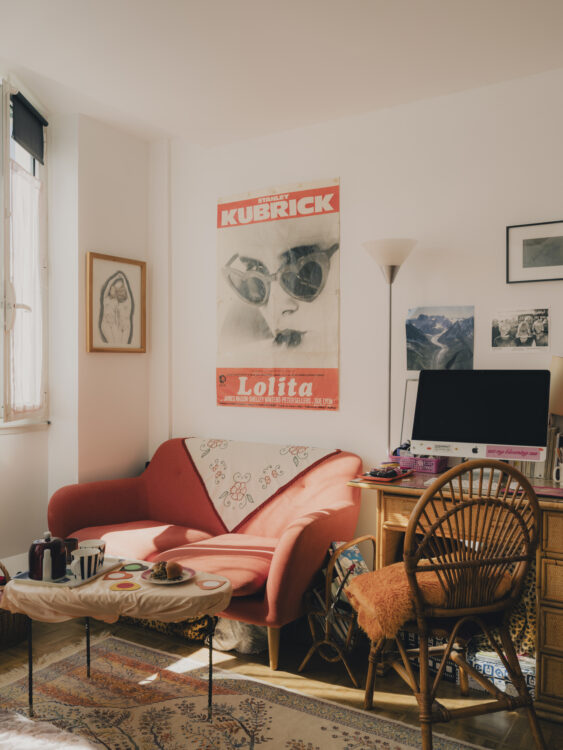
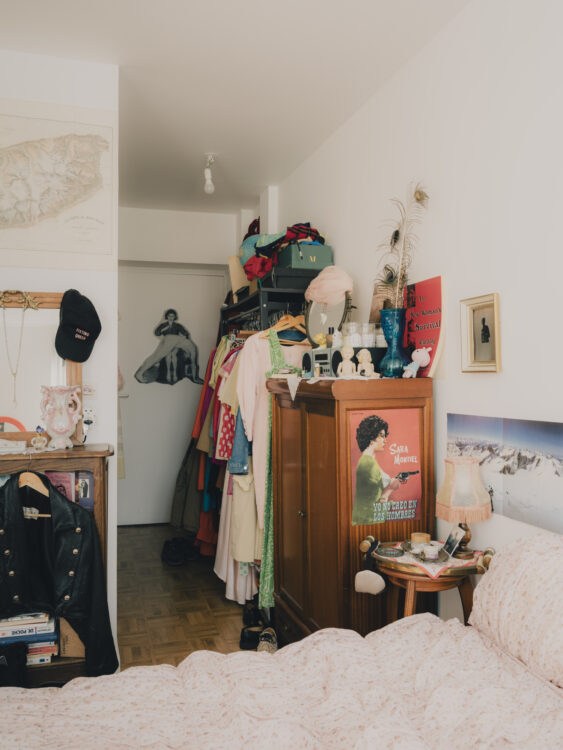
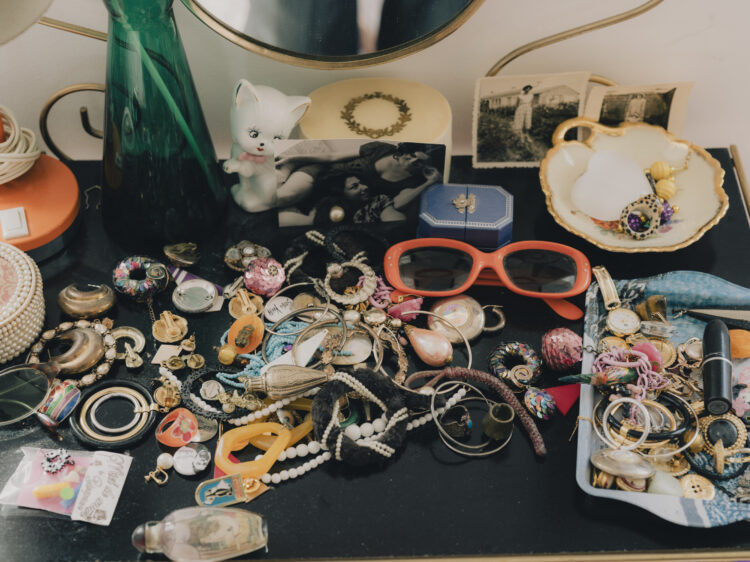
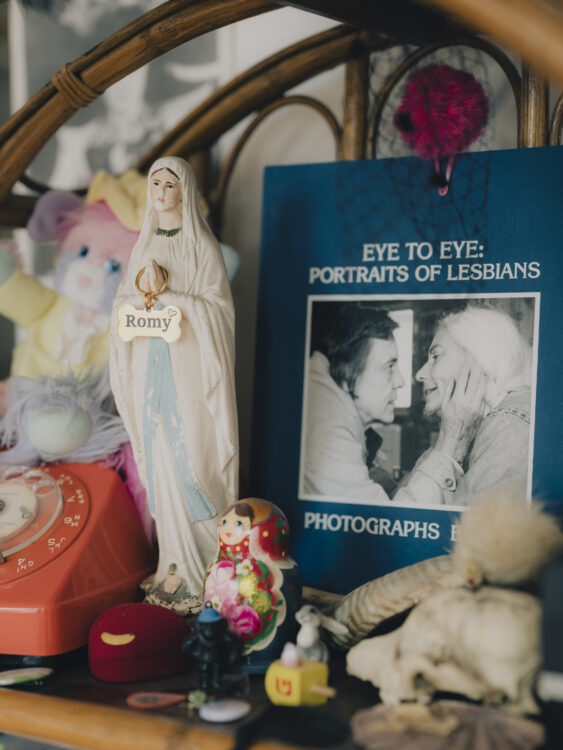
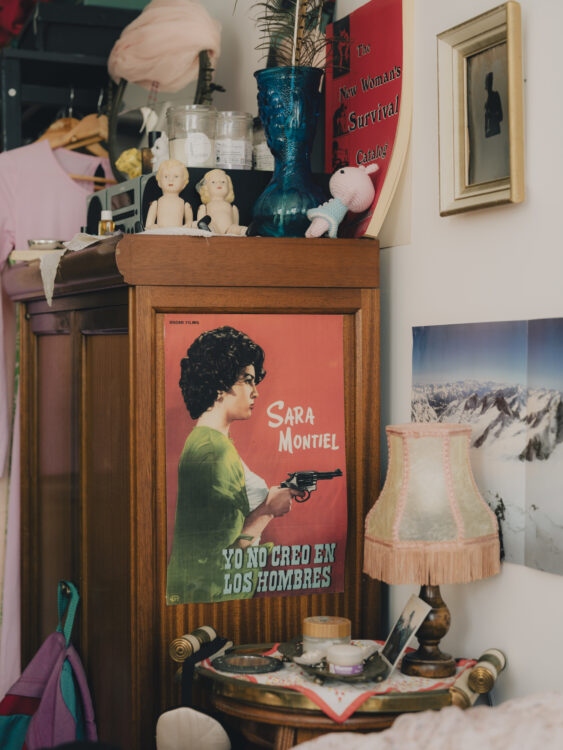
Yes. I know this apartment has a fun vibe, that also feels like a museum because of all the objects. So, generally speaking, people feel very comfortable right from the get-go. As for me, it allows me to work without feeling stressed. From time to time, it’s nice to take photos at home. I know the light, and that people will immediately say it’s cute – it’s all pink!
Would you say your apartment reflects your personality?
Yes, it’s very me, but it’s a bit out of step with the fact that I’m getting older! I wish it would expand with an extra bedroom, and then it would suit me perfectly.
Otherwise, the light in this apartment really suits my mood in the morning. The decor too. As I’m obsessed with visuals, I need to have photos of my loved ones, to see the covers of books I like. I need to see the clothes I like.
Is there anything in your apartment that you’re particularly attached to?
I have a zillion things, everything is important to me, I never throw anything away.
If you had an unlimited budget, would you redesign your apartment?
I’m a renter, so the big paradox at play for me is being at home and not at home at the same time. I’m happy with what I’ve got, but I can’t quite make it truly mine. I’d love to paint the walls pink, but I don’t dare. I have a special way of inhabiting my apartments.
Of course, if I owned my own place and had an unlimited budget, I’d do something crazy with the bathroom. I don’t think there’s anything architecturally right with this apartment. The kitchen is tiny, and that’s the problem with social housing: it’s just not done properly. The hallway is useless, for example.
It’s important for me to say it: when you live in a small apartment, as I do, you can create a pleasant life for yourself, but it’s still not easy to live in small spaces. So housing, especially in and around Paris, is a big issue. I often say to myself that I shouldn’t complain, I’m paying almost nothing for this apartment, I’m in a great neighborhood. But I regularly remind myself of how lucky I am.
You’ve also taken to mountain photography. Was it out of a need for open space, after living in the city so long?
Yes, and besides, I’ll never be able to own a place in Paris. Maybe one day I’ll be able to buy a tiny apartment in the mountains. I’d love to see the mountains every day from my window, to be able to walk through scenery that’s out of this world. I love this sense of immensity. When I come back from the mountains and find myself in my apartment, it’s hard for me, it’s stifling. I came back just a week ago, and it’s true that in the mountains I experienced a revelation, I felt called. It was almost mystical. It’s like when I started cycling in Paris seven years ago, all of a sudden it changed my relationship with the city. I manage to live in this city because I’ve found subterfuges: I ride my bike, I have a studio, I work in cafés, so life has become a lot easier for me. I’m lucky enough to be able to walk a lot and enjoy it. Everyone finds their own remedies.
Do you now also photograph naked bodies in the mountains?
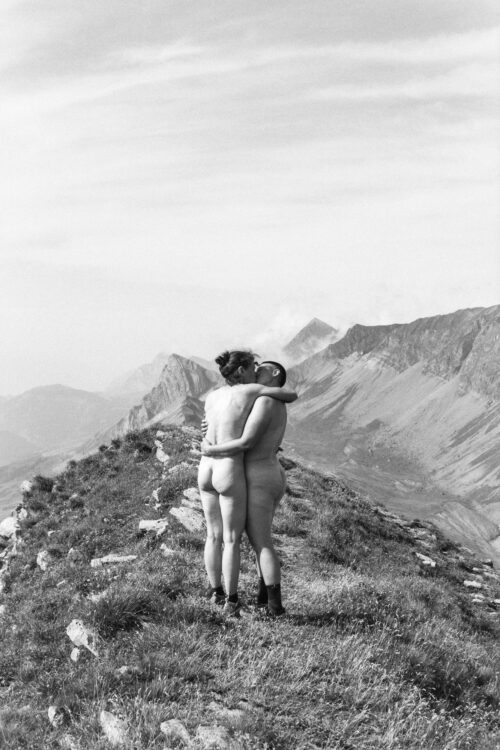
Yes, it’s a complete shift. After having photographed all these people in their homes, as part of my portraits, I’m now working outdoors, in front of huge backdrops. So I shoot nudes, but other subjects as well, because I’ve also decided to photograph the mountains as if they were a desirable subject. Whenever I look at something, I look for elements that evoke sex. I don’t know yet whether my photos are good or not. And then I have a real attraction for glaciers, I want to be one with them. I have an erotic imagination, but I don’t want to be reduced to a body, to Paris, to sex parties. For me, sexuality is much broader than just fucking people. It’s an “art of living.”
Photos : Juan Jerez
Text : Alix Van Pée