
 For Sloft+ members only

THE HEART OF THE CITY
Rome, in the late 1st century A.D. : right in the heart of the city, on the still-smoldering ruins of the Campus Martius, Emperor Domitian commissioned the construction of an immense stadium, with a capacity of 30,000 and an imposing façade, which he wished to dedicate to Greek athletic competitions such as running, jumping and throwing.
As architect Dimitri Roussel points out, this kind of political decision is almost unimaginable in today’s France: “in Antiquity, sports had a central place in cities. Nowadays, great public facilities like the Colosseum and the Baths of Caracalla wouldn’t be built in such prime locations – just look at the Stade de France,” observes the founder of the Dream agency.
Unfortunately, this observation applies to both spectator sports, and institutionalized practice, because the origins of French sports policy can be traced back over 60 years, to an abject failure. From the 1958 London Olympics, French athletes brought home just five medals, none of them gold, provoking the ire of General de Gaulle: “France must also shine through its athletes,” he admonished.
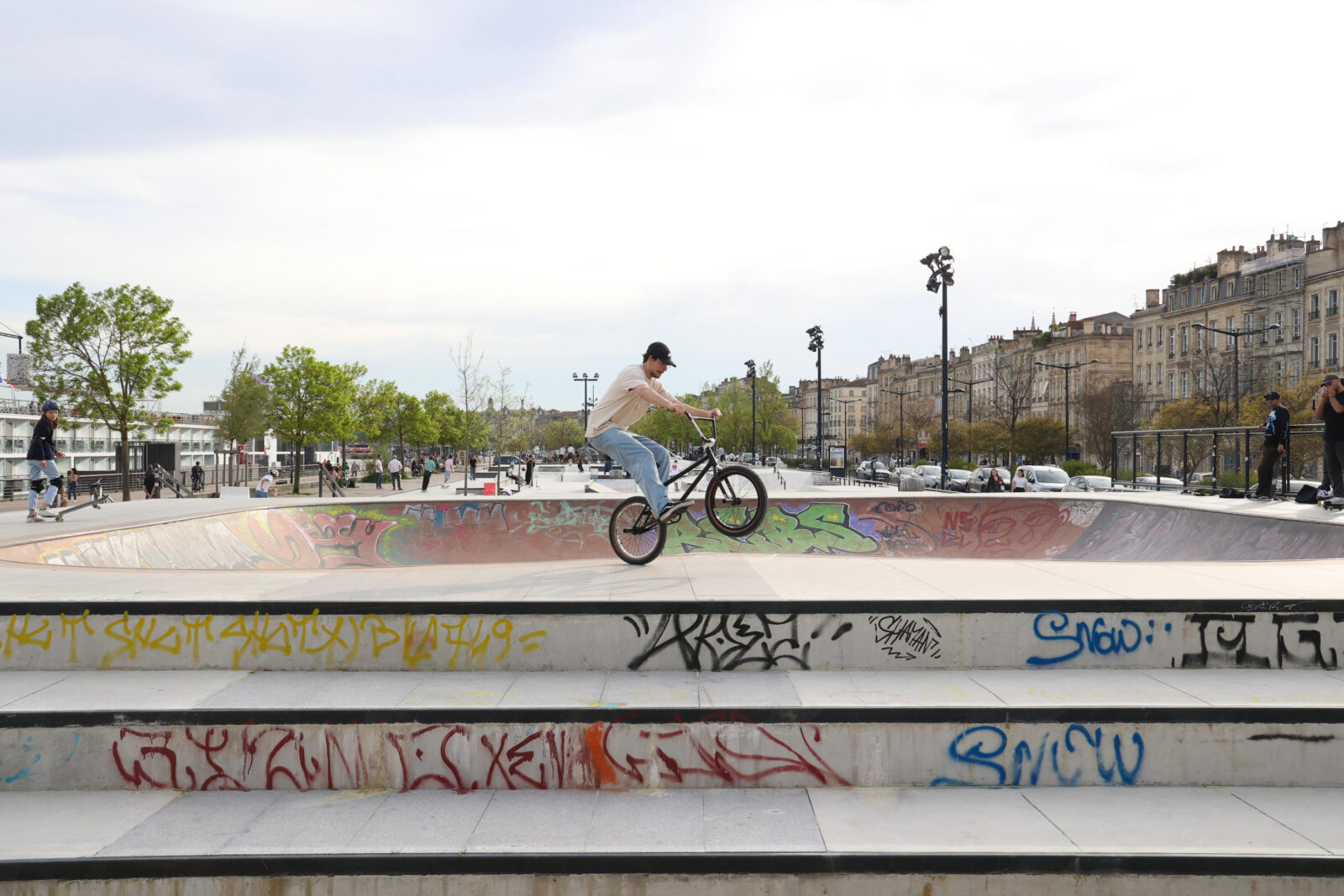
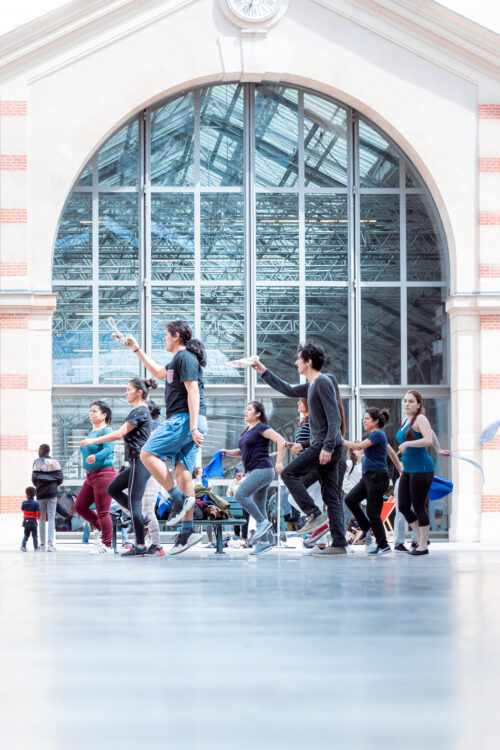
This marked the start of a vast program to democratize sports, spearheaded by the advent of the “multi-sport gymnasium.” Between 1961 and 1975, 4,000 gymnasiums, 1,500 swimming pools and 8,000 sports fields were built – mostly on the outskirts of towns, due to land pressure. However, “sports are very resilient, inviting themselves into the city through the back door,” Roussel points out. This observation is shared by sociologist Thomas Riffaud: “we underestimate the number of people who practice sports in the public space, because people don’t just go to sports facilities, sometimes they prefer to exercise in the street, for reasons of practicality, inadequate facilities, or, in the case of the female public, because such facilities are monopolized by men.”
Photography : The nave of the CENTQUATRE-PARIS © Quentin CHEVRIER